

What is unfolding off Venezuela’s coast is not routine counternarcotics policing. It is a deliberate shift in the U.S. playbook: from sanctions that slowly strangle, to interdictions that physically choke. When a major power starts stopping ships, seizing cargo, and publicly hinting at strikes onshore, it changes the geometry of risk for everyone in the region, including India, which has stakes in energy stability, maritime norms, and the wider precedent such actions set.
What’s in the news
-
Venezuela has accused the U.S. of escalating coercion at sea, including seizures of oil-linked vessels, and raised the matter at the UN.
-
The U.S. administration has described its posture as a maritime “quarantine” focused on disrupting Venezuelan oil flows and alleged narcotics-linked activity.
-
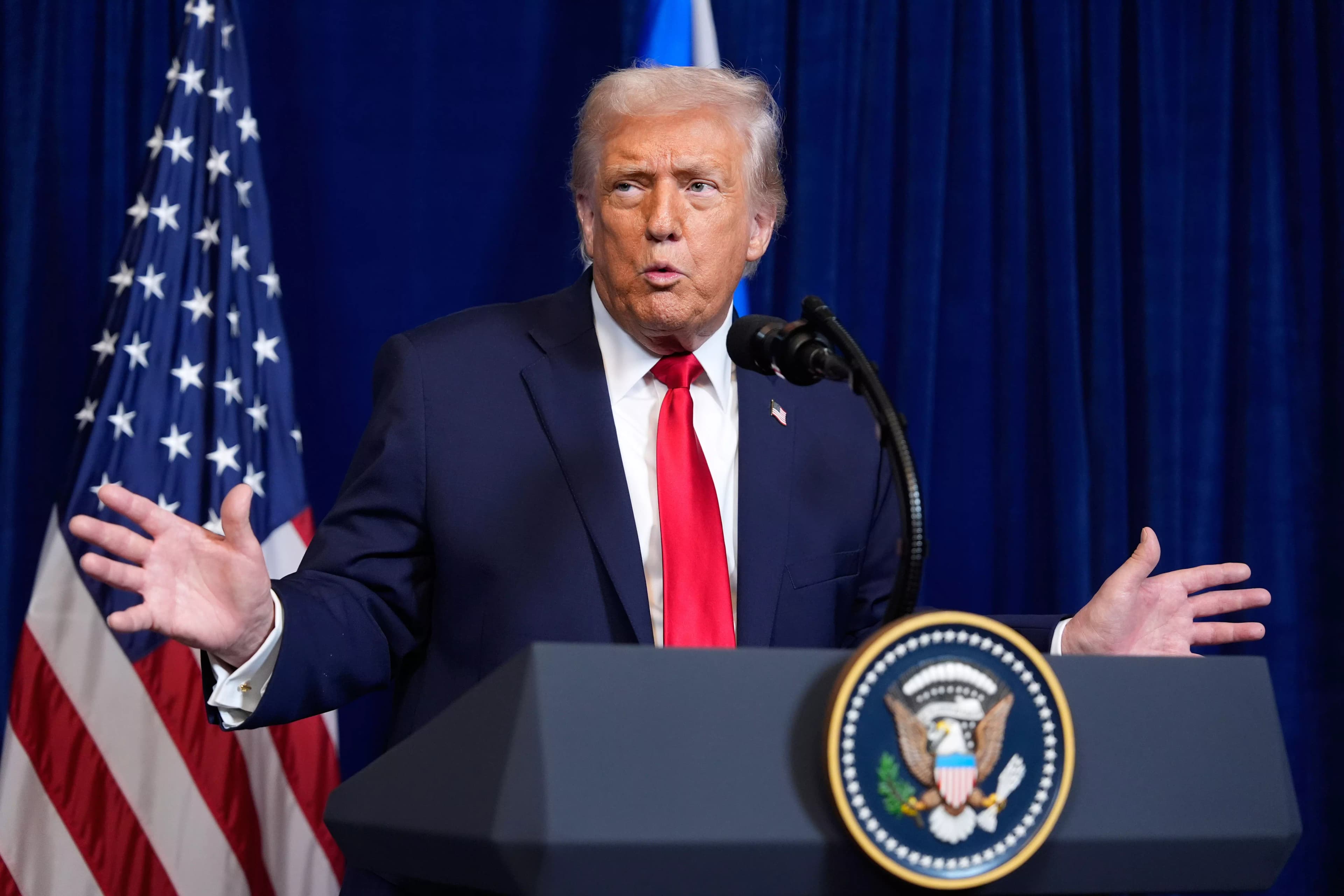
President Donald Trump has publicly claimed the U.S. hit a facility tied to “drug boats”, an escalation if independently confirmed.
Background and context
Venezuela has long sat at the intersection of three realities:
-
Abundant hydrocarbons but constrained production and exports due to sanctions and underinvestment.
-
Political polarisation and a contested legitimacy narrative around the Maduro government.
-
Great-power competition, as Russia and China have maintained deep financial and strategic links with Caracas.
Historically, U.S. pressure has cycled through recognition politics, targeted sanctions, sectoral sanctions, and attempted diplomatic bargains. The new edge is kinetic-adjacent coercion: stopping and searching ships, seizing cargo, and deploying heavy naval assets nearby. That raises the temperature because it compresses decision time. A misread at sea becomes a crisis on land very quickly.
Key provisions / key details
The operational spine of the escalation has three moving parts:
-
Maritime interdiction and seizures: Tanker boardings and cargo seizures create immediate economic pain and signal deterrence to shipping networks.
-
Military posture in the Caribbean: The visible redeployment of major naval assets is meant to make enforcement credible and to intimidate evasion.
-
Covert and legal framing: Reports of authorised covert action, paired with rhetoric of an “armed conflict” with cartels, widen the justification space and reduce the political cost of escalation.
Why it matters
For Venezuela and the region:
-
It raises the probability of accidental escalation: warning shots, misidentification, or confrontation with escorts.
-
It can amplify internal instability, but not necessarily in a controllable direction. Sanctions-plus-force often strengthens hardliners before it weakens them.
-
It risks migration shocks across the region if economic conditions deteriorate further or conflict expands.
For the global economy:
-
Any sustained choking of Venezuelan crude flows can tighten certain grades in the market, complicate supply chains, and feed volatility.
For India:
-
India benefits from stable energy prices and predictable maritime rules. Precedents of unilateral “quarantine” actions can normalise coercive interdictions elsewhere.
-
India also has an interest in preserving UN-centric dispute handling over “might-makes-right” enforcement.
Arguments for and against
The case the U.S. is making
-
Deterrence: raising the cost of illicit trafficking networks and sanction-evasion shipping.
-
Pressure for political change: forcing elite splits by constraining revenue.
-
Strategic signalling: demonstrating that Chinese and Russian stakes do not immunise a partner regime.
The case against the strategy
-
Legitimacy deficit: ship seizures and quasi-blockade tactics invite “piracy” allegations and widen diplomatic resistance.
-
Weak evidence problem: when proof is not made public, enforcement looks selective and political, which erodes support.
-
Blowback risk: escalation can unify regime coalitions, expand black markets, and generate new armed actors.
-
Capability mismatch: the U.S. can punish, but it cannot easily “own” the aftermath. Libya remains a cautionary tale in the Global South memory.
Constitutional / legal angle
This episode tests three overlapping legal frames:
-
UN Charter principles: especially the prohibition on the use of force and coercion that violates sovereignty, unless justified under recognised exceptions.
-
Law of the sea: interdictions in international waters raise questions of legal basis, flag-state consent, and the limits of “right of visit” practices.
-
U.S. domestic authority: sustained military-style operations and covert action claims predictably trigger scrutiny over executive power and oversight, particularly when actions resemble hostilities rather than policing.
Even when governments avoid the word “blockade,” the world judges by effects, not labels.
Implications
Short-range: heightened naval encounters, insurance premiums, rerouting by shipping, and sharper rhetoric at the UN.
Medium-range: consolidation of rival camps in Latin America, deeper China–Russia coordination with Caracas, and a bigger grey-zone shipping ecosystem.
Long-range: erosion of norms against unilateral interdiction, making maritime coercion a more common instrument of geopolitics, with spillovers into other theatres.
Way ahead
A workable path must reduce escalation while preserving accountability:
-
Move enforcement claims into evidence-backed multilateral channels: If narcotics is the core charge, publish verifiable proof and anchor actions in cooperative regional mechanisms, not ad hoc coercion.
-
Separate counter-narcotics from regime-change signalling: mixing the two erodes legitimacy and hardens resistance.
-
Create deconfliction protocols at sea: practical rules of engagement and hotlines reduce the risk of miscalculation.
-
Offer a credible off-ramp: coercion without a diplomatic exit tends to become permanent, and permanent pressure produces permanent instability.
-
For India: maintain a steady stance on freedom of navigation and UN-based dispute handling, while insulating energy security through diversified sourcing and strategic reserves, mindful of price spikes and shipping disruptions.
Source credits
Reuters; The Washington Post; Associated Press; Financial Times; The Guardian; France 24; Al Jazeera; OPEC (Annual Statistical Bulletin); Nobel Prize (Norwegian Nobel Committee).