

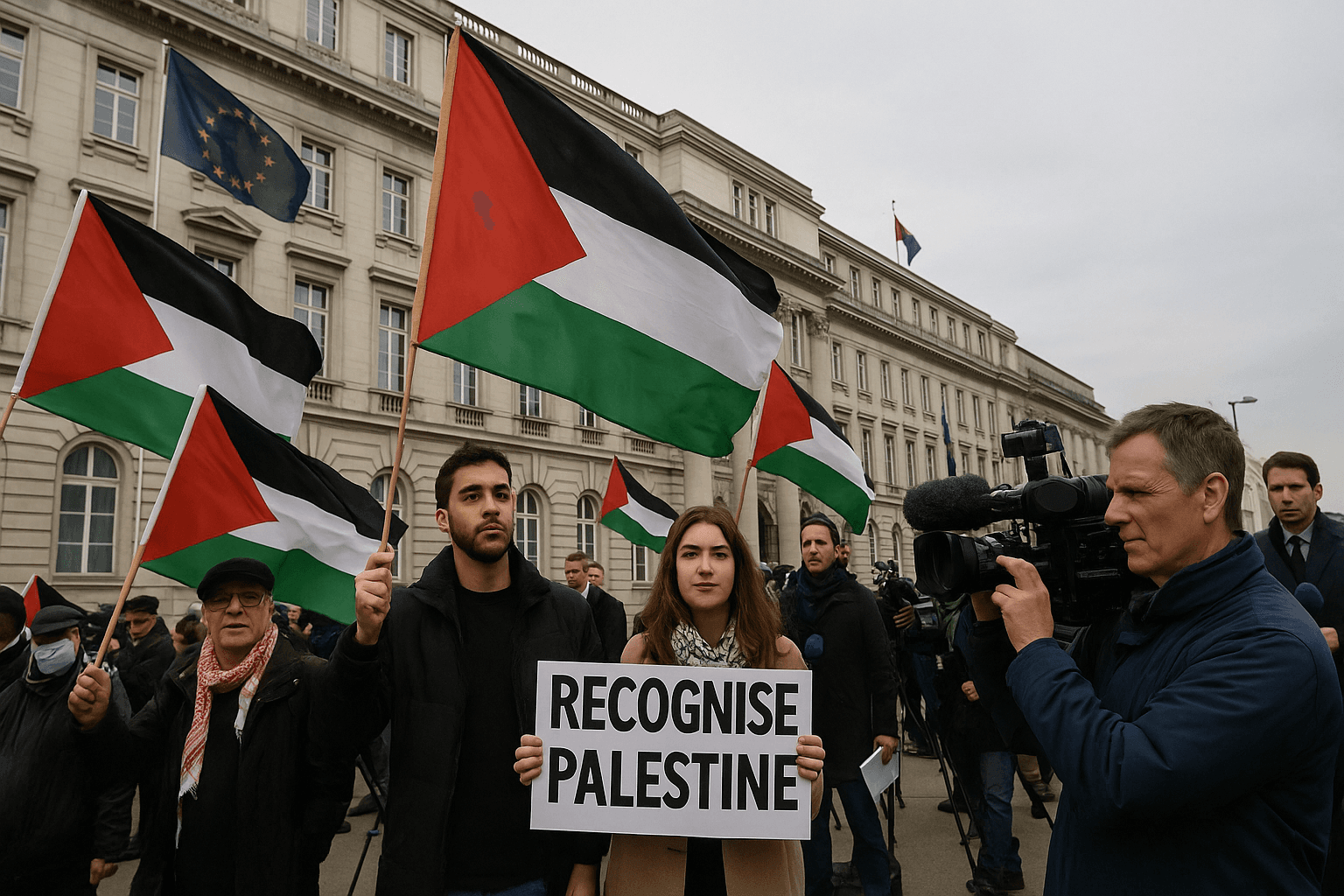
Britain, Australia and Canada on Sunday formally recognised the State of Palestine, marking a dramatic break from decades of Western policy and sparking swift condemnation from Israel. The move comes amid the Gaza war and growing international pressure to revive a two-state solution.
The Story
U.K. Prime Minister Keir Starmer announced the recognition in a statement on X, describing it as a step to “revive the hope of peace for the Palestinians and Israelis.” Canadian Prime Minister Mark Carney echoed the sentiment, offering partnership in “building the promise of a peaceful future.” Australia joined the move, while Portugal signalled it would follow shortly.
The decisions make Britain and Canada the first G7 nations to extend recognition, placing them at odds with the United States and Israel. With France and other European nations expected to weigh in during the UN General Assembly in New York, momentum around Palestinian statehood is gaining strength.
Israeli Prime Minister Benjamin Netanyahu denounced the move, calling it an “absurd reward for terrorism” that endangers Israel’s existence. The recognition comes nearly two years into the Gaza war, sparked by Hamas’s October 7, 2023 attacks.
Deputy Prime Minister David Lammy admitted the U.K. bore “a special burden of responsibility” due to its role in the 1917 Balfour Declaration, which paved the way for Israel’s creation. He emphasised that recognition does not solve immediate humanitarian needs but signals renewed commitment to a two-state solution.
Why It Matters
This recognition alters the diplomatic balance around the Israeli-Palestinian conflict. For Palestinians, it validates decades of struggle for statehood and strengthens their negotiating position. For Israel, it deepens diplomatic isolation and heightens tensions with key allies.
The move also increases pressure on the U.S., which continues to back Israel, potentially opening rifts within the Western alliance. For the global South — much of which already recognises Palestine — it reinforces calls for equity in international diplomacy.
Background / Context
-
Over 140 of 193 UN member states already recognise Palestine.
-
Palestinian statehood ambitions date back decades, tied to the Oslo Accords (1993) and subsequent failed negotiations.
-
The Gaza war has claimed tens of thousands of lives, displaced millions, and drawn unprecedented scrutiny of Israel’s military campaign.
-
The U.K.’s July 2025 stance linked recognition to progress on a ceasefire, aid delivery, and preventing West Bank annexation.
-
The Palestinian Authority, which governs parts of the West Bank, has lobbied for recognition as leverage against Israel’s settlement expansion.
Implications
-
For Palestinians: Recognition strengthens diplomatic legitimacy but does not ease immediate suffering in Gaza, where humanitarian needs remain acute.
-
For Israel: The move signals declining Western unity. If France and other G7 states follow, Israel could face mounting diplomatic and economic pressure.
-
For Global Diplomacy: Recognition could accelerate efforts at the UN to push for a two-state framework, though the U.S. veto power remains decisive.
-
For Regional Stability: The shift may embolden Palestinian leaders while complicating ceasefire negotiations and hostage talks with Hamas.
-
For India and Others: Countries balancing ties with both Israel and Palestine may face renewed pressure to clarify positions.
Conclusion
The recognition of Palestine by Britain, Australia, and Canada marks a watershed moment, transforming the diplomatic landscape of the Middle East conflict. Whether it revives the two-state solution or further polarises global politics will depend on how Israel, the U.S., and other powers respond in the coming months.