

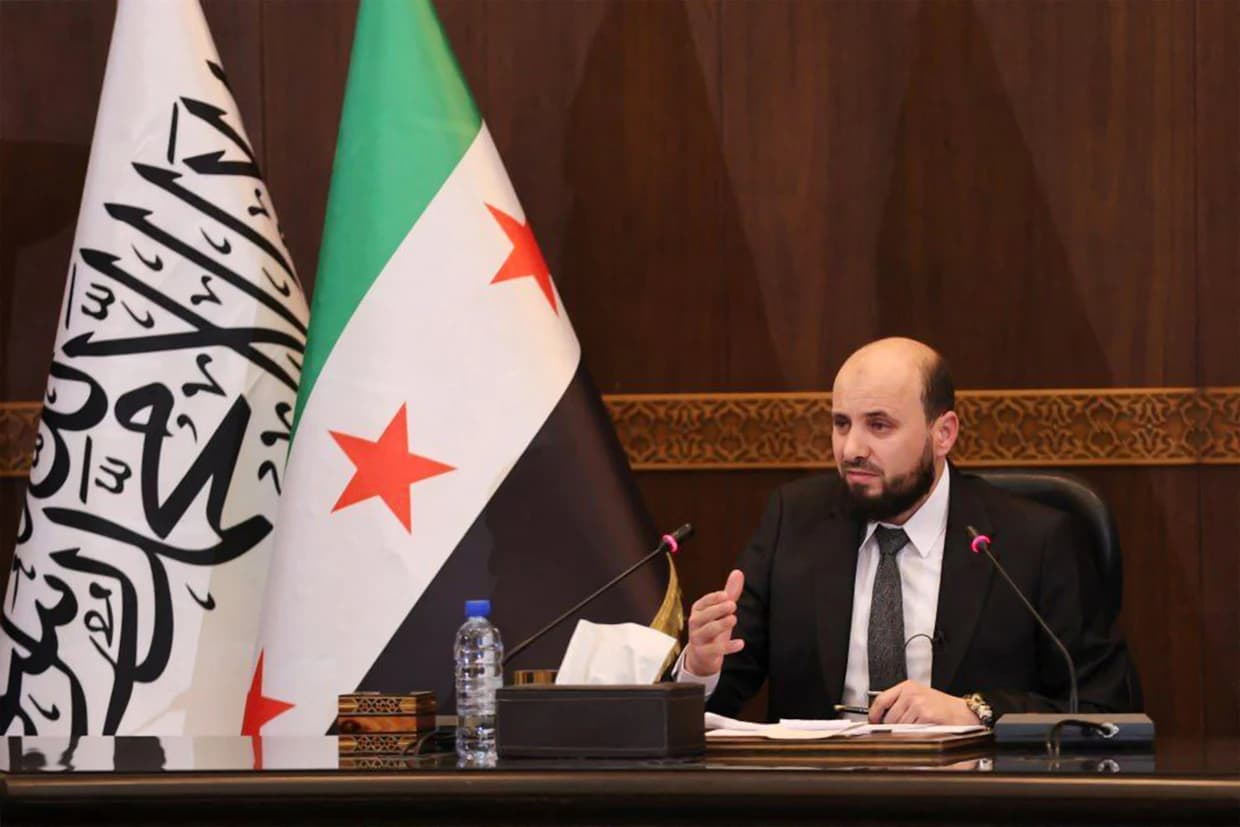
Syria, once a cradle of ancient civilisation, now stands at a critical political turning point as it prepares for its first elections since the fall of Bashar al-Assad. The vote reflects a nation rebuilding from years of civil war, shaped by deep historical roots, complex geography, and evolving governance challenges.
The News
For the first time since Bashar al-Assad’s ouster in December 2024, Syria is holding parliamentary elections to form a 210-member People’s Assembly.
-
Voting system: Two-thirds (≈140 seats) will be chosen through electoral colleges in 50 districts; the remaining one-third will be appointed by interim President Ahmad al-Sharaa.
-
Representation gaps: Elections are postponed in Sweida and Kurdish-held northeast Syria due to disputes with local authorities, leaving about 20 seats vacant.
-
Women’s role: Women make up only 14 % of 1,578 candidates despite a nominal 20 % quota among electors.
-
No parties yet: All political parties were dissolved after Assad’s fall; candidates are running as independents until a new party law is enacted.
-
Criticism: Analysts such as Haid Haid (Chatham House) warn of “unclear criteria, limited oversight, and potential manipulation” in selecting electors and subcommittees.
Interim officials argue that a popular nationwide vote is impractical given the absence of a reliable voter registry and the displacement of millions after 14 years of conflict. The new Parliament will serve a 30-month transitional term to prepare ground for direct elections.
Historical Context
Syria’s current transition ends five decades of Assad family rule under the Ba’ath Party.
-
Hafez al-Assad (1971-2000) built a centralized authoritarian regime rooted in the military and intelligence network.
-
Bashar al-Assad (2000-2024) continued that model until civil war (2011-2024) devastated the country.
His ouster in December 2024 by a coalition of rebel groups and defected officers created a political vacuum now filled by an interim administration.
The election therefore serves as both symbolic rupture and stress-test of Syria’s ability to move beyond dynastic autocracy.
Geography and Strategic Setting
Syria sits at the heart of West Asia, bordering Turkey, Iraq, Jordan, Israel, Lebanon, and the Mediterranean.
Its geography divides into:
-
Fertile western corridor (Damascus, Homs, Latakia) — under central control.
-
Northern plains — contested by Turkish-backed groups.
-
Eastern Euphrates region — under Kurdish-led Syrian Democratic Forces with limited U.S. presence.
This fragmentation explains why nationwide polling is impossible and why local political structures now act semi-autonomously.
Political and Governance Framework
Transitional Design (2025)
-
Executive: Interim President Ahmad al-Sharaa and a Council of Ministers.
-
Legislature: People’s Assembly (210 seats) — 140 via indirect vote, 70 presidentially appointed.
-
Oversight: A Supreme Elections Committee under the Interim Constitutional Declaration.
Governance Challenges
-
Opacity – selection of electoral colleges lacks public criteria or supervision.
-
Exclusion – Sweida and Kurdish regions unrepresented.
-
Gender gap – only 14 % female candidates.
-
Institutional weakness – absence of judiciary or media independence to monitor polls.
Despite these flaws, some observers view the exercise as a pragmatic first step toward rebuilding state legitimacy after war.
Socio-Economic and Humanitarian Landscape
-
Population: from 22 million (2010) to ≈17 million today.
-
Economy: GDP down ≈ 60 % since 2011; reconstruction cost > $400 billion.
-
Living conditions: 90 % below poverty line; energy and wheat shortages persistent.
-
Displacement: ≈ 6 million refugees abroad and 7 million internally displaced.
Economic stabilisation will depend on whether the new assembly can attract investment and negotiate reconstruction aid from Gulf and Western donors.
Foreign Influence and Regional Dynamics
Even after Assad’s fall, foreign troops remain:
-
Russia retains bases in Latakia and Tartus.
-
Iran continues militia and energy networks.
-
Turkey holds buffer zones in the north.
-
U.S. maintains special forces in the east for anti-ISIS operations.
These external presences limit Syrian sovereignty and complicate central electoral control.
What Analysts Are Watching
-
Legitimacy: Will the process be accepted domestically and internationally, or seen as elite engineering?
-
Inclusivity: How will the interim president use his one-third quota to integrate women, minorities, and displaced regions?
-
Path to Popular Vote: Can a credible census and voter registry be built before 2027?
-
Security: Whether ceasefire violations or local resistance derail voting in volatile provinces.
The Road Ahead
Syria’s election is neither full democracy nor pure theatre — it is a managed attempt at re-institutionalisation. Its success depends on three parallel tracks:
-
Political – drafting a new constitution and enabling party pluralism.
-
Administrative – building transparent voter systems and independent oversight.
-
Social – ensuring reconciliation among fractured ethnic and sectarian groups.
If these elections mark the beginning of institutional accountability, they could help Syria pivot from survival to recovery. If not, they risk reproducing the same closed power structures under a different banner.
Conclusion
The 2025 parliamentary elections are a hinge moment in Syrian history — the first after five decades of authoritarianism and a brutal civil war.
While limited and imperfect, they will determine whether post-Assad Syria evolves into a representative republic or slides back into elite-managed rule.
For a nation long defined by geography, conflict, and resilience, the test ahead is simple yet profound: can power finally pass from the gun to the ballot?