

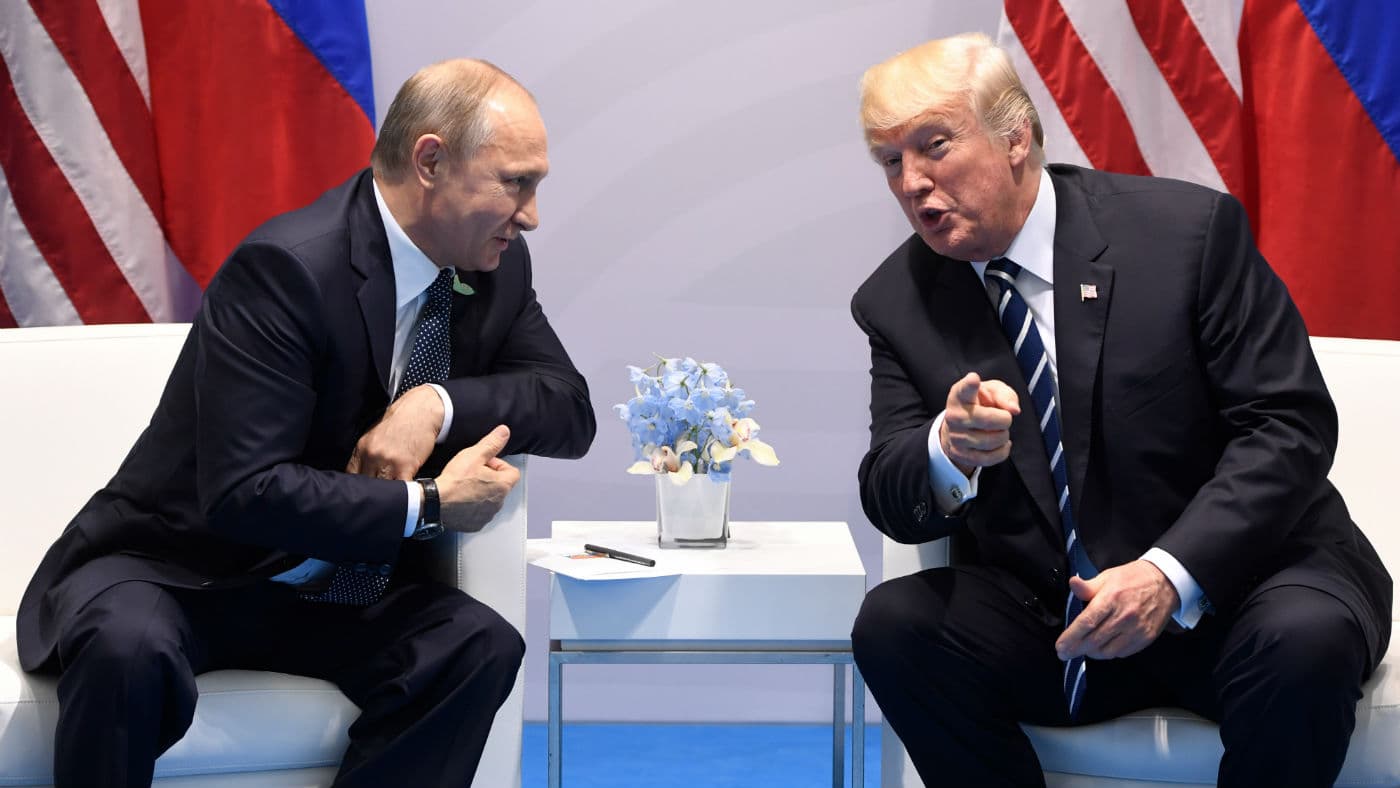
The United States has escalated financial pressure on Russia’s oil sector, renewing a long arc of confrontation that began in the 20th century and never fully ended. The Cold War’s ideological struggle has morphed into a sanctions-driven contest over war finance, energy flows, and global alignments. The stakes are felt worldwide, from inflation and supply chains to nuclear stability and digital conflict.
The Story
The latest U.S. move targets Russia’s largest oil companies with sanctions designed to constrain revenues that support the war in Ukraine. Washington has set near-term wind-down dates for transactions and is encouraging partners to align policy. Markets reacted with higher crude prices, and major Asian buyers are reassessing purchase schedules and risk exposure. The message is clear: this phase of U.S.–Russia competition is being waged through financial plumbing, maritime insurance, shipping logistics, and secondary sanctions, not only through tanks and missiles.
For Moscow, hydrocarbons fund the budget and the war effort; for Washington, throttling that revenue is a way to raise Russia’s costs without direct military confrontation. The ripple effects are significant. Refiners worldwide must recalibrate blends and deliveries; insurers weigh exposure; shipping lanes and trans-shipment hubs face tighter scrutiny. Energy prices, already sensitive to geopolitical shocks, move in step with each new designation or compliance advisory.
Why It Matters
The U.S.–Russia relationship is a load-bearing pillar of the international system. When it deteriorates, the effects cascade through energy markets, commodity inflation, nuclear arms control, global finance, cyberspace, and proxy theaters. The present sanctions round is not a narrow bilateral spat, it is a structural stress test for how the world enforces rules, prices risk, and keeps trade moving under fire.
Think of the system like a circulatory network. Sanctions restrict arteries that carry the revenue “blood” to the Russian state. Traders try to route around blockages, but compliance “clots” can jam alternative pathways, raising costs for everyone.
Background / Context
From uneasy allies to global rivals:
-
1941–45: The U.S. and Soviet Union fight Nazi Germany as allies of necessity.
-
1947–91: The Cold War defines international politics: NATO vs. Warsaw Pact, ideological competition, proxy wars, nuclear brinkmanship, and arms control breakthroughs like SALT, INF, and START.
-
1991–2000s: Post-Soviet Russia faces economic turmoil, NATO enlargement proceeds, and cooperation rises and falls on issues from counterterrorism to arms reductions.
-
2014: Russia’s annexation of Crimea triggers Western sanctions and a long sanctions cycle.
-
2022–25: Russia’s full-scale invasion of Ukraine leads to unprecedented financial, export-control, and energy measures by the U.S. and allies. Price caps, shipping, and insurance restrictions create a complex compliance regime that continually evolves.
Core concepts (plain English):
-
Primary vs. secondary sanctions: Primary bars U.S. persons and jurisdictions; secondary threatens penalties on non-U.S. actors who materially support sanctioned activity.
-
Price cap: Allows shipments of Russian crude and products below a set price, provided Western services are used and documentation proves compliance.
-
De-risking: Banks, insurers, and shippers cut off borderline business to avoid accidental breaches, even when technically lawful.
Contemporary Issues Shaping the Relationship
1) War in Ukraine and security architecture:
The battlefield and the sanctions battlefield are intertwined. Each offensive or defensive move informs the next round of designations, export controls, and technology blocks. The question behind the fighting is larger: what European security order will exist when it ends, and who will underwrite it.
2) Energy, price caps, and the “shadow fleet”:
A parallel ecosystem of older tankers, opaque ownership, and alternative insurance has grown to move sanctioned barrels. Enforcement swings between tightening and leakage. Every adjustment affects global benchmarks, refining margins, and inflation expectations.
3) Nuclear arms control under strain:
Cold War treaties that once stabilized competition are frayed or suspended. Dialogue channels exist but are thinner. Without verifiable limits and inspections, strategic miscalculation risks rise.
4) Technology and cyber:
Export controls aim to hobble Russia’s access to advanced semiconductors and dual-use tech, while cyber operations, espionage, and information campaigns continue as a low-visibility front.
5) Global finance and fragmentation:
Sanctions push experimentation with non-dollar settlements, regional payment systems, and commodity-for-currency swaps. Full de-dollarization is unlikely in the short run, but partial workarounds can reduce transparency and complicate compliance.
6) The China factor:
Beijing’s position shapes Russia’s capacity to absorb pressure. Expanded trade, energy purchases, and tech flows between China and Russia complicate U.S. leverage and split global supply chains into semi-aligned spheres.
Impact on the World
Energy and inflation:
Sanctions on large producers remove or reroute supply, tightening markets and lifting prices. Even modest price rises transmit quickly to transport, food, and manufacturing costs. Emerging economies, which spend a greater share on energy and staples, feel the pinch first.
Shipping, insurance, and compliance costs:
Maritime insurance premiums, Know-Your-Customer checks, and documentation burdens add overhead to every barrel shipped. Smaller traders and refiners may be priced out or choose safer, non-sanctioned origins, reducing competition.
Financial system stress points:
Correspondent banking ties can be severed, and cross-border payments delayed. Uncertainty over what is permissible increases legal risk, prompting conservative behavior that amplifies the intended pressure of sanctions.
Arms control and crisis stability:
When dialogue shrinks, misunderstandings expand. The absence of predictable arms-control guardrails increases the chance that regional incidents escalate.
Norms and precedents:
The breadth of sanctions becomes a template. Other states study the playbook, either to align or to inoculate themselves by building alternative rails. The result is a more balkanized global economy with higher friction.
India’s Place in the Equation
Energy security and refinery economics:
India is a large crude importer. Discounted Russian barrels since 2022 improved margins and helped contain domestic inflation. Fresh U.S. sanctions tighten due-diligence demands, raise shipping and insurance risk, and may reduce availability, forcing refiners to rebalance toward Middle Eastern, Latin American, or African crudes. Product slates, refinery configurations, and long-term supply contracts all matter in how quickly and how far this pivot goes.
Strategic autonomy and multi-alignment:
India’s doctrine emphasizes independent choices anchored in national interest. New sanctions raise the political cost of Russian barrels and the operational cost of moving them, but New Delhi will try to preserve room to maneuver, keeping ties with Washington on technology and defense while maintaining legacy links with Moscow.
Defense legacy, tech future:
India’s armed forces historically relied on Russian platforms and spares. Recent years brought diversification toward U.S., European, and domestic systems. Sanctions increase complexity in payments and spares for older Russian equipment, accelerating indigenization and supplier diversification while preserving critical maintenance channels.
Trade, payments, and compliance:
Alternative payment mechanisms, invoicing currencies, and bank-level risk appetites determine how much trade remains viable. Indian firms, especially large listed ones, tend to hew closely to compliance guidance to protect global financing, listings, and reputation.
Diplomacy and optics:
India participates in Western-led forums and Global South coalitions, and engages Russia in groupings like BRICS and the SCO. The optics of energy purchases are watched in Washington and European capitals, while India seeks predictable supplies at competitive prices. Balancing these vectors is the essence of strategic autonomy.
Implications
Short term:
-
Volatility in crude benchmarks and product cracks as traders digest enforcement signals.
-
Higher compliance and logistics costs for barrels linked to Russia, even if not legally prohibited.
-
Faster renegotiation of term contracts and a shift in spot purchases toward lower-risk origins.
Medium term:
-
Incremental fragmentation of energy and finance, with parallel shipping and insurance ecosystems.
-
Acceleration of India’s crude diversification, domestic exploration push, and strategic reserves optimization.
-
Continued stress on global arms-control architecture unless new channels are built.
Long term:
-
A sanctions-normalized world where economic statecraft is a first-resort tool, not a last-resort one.
-
More self-reliant supply chains for critical tech and energy equipment, but at the cost of efficiency.
-
A durable but uneasy equilibrium between the U.S. and Russia, with periodic flare-ups and ad hoc guardrails.
Conclusion
The U.S.–Russia rivalry has shifted from ideological blocs to financial and technological choke points. Each new sanction, waiver, or enforcement action now doubles as a signal to markets and states about the future of the rules-based order. For India, the challenge is to protect energy security and economic stability while preserving strategic flexibility. How deftly New Delhi manages this transition, and how predictably Washington enforces its regime, will shape the next chapter of global stability.