

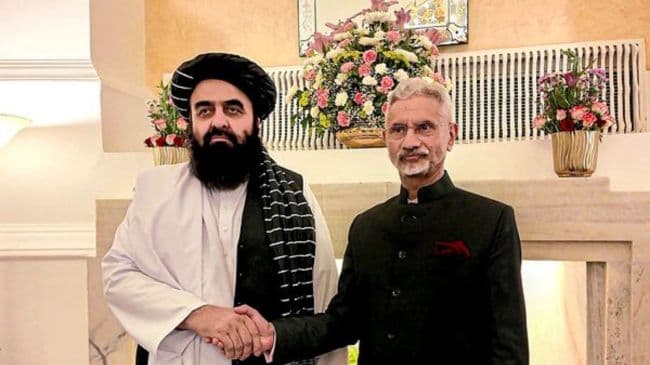
“Deoband is our alma mater,” Amir Khan Muttaqi told a packed hall at Darul Uloom, while promising a bright future for India Afghanistan ties. The optics were stark, a senior Taliban leader feted at one of South Asia’s most influential Islamic seminaries, days after Delhi signalled it would upgrade engagement with Kabul. For many Indians, especially those troubled by the Taliban’s record on women and minorities, the moment felt jarring. Yet foreign policy is often the art of managing uncomfortable neighbourhoods. The question is not whether India approves of the Taliban, but whether India can afford to ignore Afghanistan.
Argument 1: Chanakya’s Neighbourhood Logic, Engage the Nearest First
Kautilya’s Arthashastra, distilled in the Rajamandala theory, treats geography as destiny. A state’s immediate neighbours matter most, either as threats to be deterred or as partners to be cultivated, because proximity magnifies both risk and opportunity. For India, Afghanistan is the western hinge of continental connectivity, a buffer to the trans Durand belt, a corridor to Central Asia, and a potential pressure point on Pakistan. Chanakya would argue that persistent estrangement invites encirclement by rival patrons; calibrated engagement, by contrast, creates bargaining space, information flow, and leverage. In a crowded arena of external influencers, staying absent is not the same as staying neutral.
Argument 2: The Gujral Doctrine, Give More, Expect Less at First
I. K. Gujral’s five principles proposed a simple test for South Asia, India, as the largest power, should sometimes make unilateral, non reciprocal concessions to stabilise ties and earn trust. Applied to Kabul today, this does not mean endorsing the Taliban’s ideology. It means separating urgent, people centred outcomes, food, medicines, winter relief, scholarships, from the slower, messier debate over political recognition. India’s developmental brand was built on precisely this approach after 2001, roads, dams, transmission lines, the Parliament building, and capacity building that Afghans still remember. A careful revival of that playbook under a humanitarian umbrella can serve Afghan citizens now, without conferring a blank cheque on their rulers.
Argument 3: Security and Statecraft, Influence Beats Isolation
Engagement buys access. Access shapes behaviour. Delhi’s limited technical mission in Kabul has already enabled quiet humanitarian deliveries and crisis coordination. If India reopens a full embassy, it strengthens eyes and ears in a theatre where terror networks, narcotics flows, and great power competition intersect. Abstention cedes the ground to actors whose interests cut against India’s, shaping curricula, policing, and patronage in ways that can echo into Kashmir and the heartland. Presence also creates space for discreet red lines, on cross border terror, minority protections, and transit guarantees for connectivity projects.
Argument 4: Economics and Connectivity, Afghanistan Is a Bridge, Not a Cul de Sac
India’s signature assets in Afghanistan, the Zaranj Delaram Highway, the transmission line to Kabul, the Salma Dam, and the Parliament complex, were never vanity projects. They were instruments of connectivity and trust. With Chabahar maturing, Afghanistan can again be a land bridge to Central Asia’s markets and minerals. Even modest stability lowers logistics risk and widens the arc of Indian commerce westward. Engagement is not a silver bullet, it is a necessary condition for any economic corridor to function.
Counterpoint: The Moral Cost, Women, Minorities, and the Recognition Dilemma
None of this absolves the Taliban’s record. Repressive edicts on girls’ education and women’s work, curbs on civil society, and persecution of minorities demand clear Indian messaging. The fear is reputational, by receiving high level visits, are we normalising an illiberal order. Two points temper that concern. First, engagement is not recognition, diplomacy is a spectrum, and humanitarian pragmatism can be ring fenced from political endorsement. Second, influence requires proximity, without channels, India cannot push for school access, relief delivery, prisoner cases, or safe passage for at risk Afghans. The moral line is drawn in the conditionality, aid must reach women and children, scholarships must stay open, any step toward formal recognition must be tied to verifiable, reversible commitments on rights and counter terror safeguards.
Background and Context Box
A Long Arc of Ties
• 1950, Indo Afghan Treaty of Friendship affirms everlasting peace and friendship.
• 2011, Strategic Partnership Agreement expands security, economic and people to people cooperation.
• 2001 to 2021, India invests in roads, Zaranj Delaram, power lines to Kabul, Salma Dam, Parliament building, and large scale capacity building.
• 2021 to present, Embassy downsizing after Taliban takeover, technical mission sustains humanitarian channels, 2025 signals for embassy reopening and renewed outreach.
This Week’s Trigger
• Amir Khan Muttaqi’s India visit includes Darul Uloom Deoband, upbeat statements about sending diplomats and a bright future for ties.
Way Forward: A Realist Roadmap That Keeps Conscience Intact
1) Embassy Reopening, With Guardrails
Restore a full diplomatic footprint in Kabul, but tie any step up, development grants, training slots, trade facilitation, to specific, monitorable humanitarian and rights outcomes, especially girls’ education and women’s employment. Use on ground verification and third party partners to reduce diversion risks.
2) Humanitarian Plus Development 2.0
Restart high impact, low visibility projects, community clinics for mothers and children, teacher stipends, solar micro grids for schools, wheat for work in quake hit districts like Kunar. Keep delivery apolitical and district level to avoid central patronage capture.
3) Security Firewalls and Quiet Red Lines
Institutionalise back channels on counter terror, hostage cases, narcotics interdiction, and prisoner concerns raised during the visit. Make cooperation outcomes, not promises, the currency for any incremental political warmth.
4) Connectivity That Binds, Not Bypasses
Leverage Chabahar, Zaranj, Delaram to reopen licit trade chains that benefit Afghan farmers and Indian exporters. Offer customs training and standards support that lift Afghan produce into Indian and Gulf markets, reducing the Taliban’s reliance on illicit rents.
5) Regional Geometry, Chanakya Style
Apply the Rajamandala lens to stabilise the western arc, cultivate convergences with Iran and Central Asian states on transit and energy, manage competitive overlap with other patrons by anchoring India’s edge, development credibility, education, tech skilling, and healthcare.
6) Values by Design, Not Slogans
Bake rights protections into programme design, women only service windows, female health worker quotas, stipend accounts that pay directly to women beneficiaries, and scholarship seats reserved for Afghan girls in Indian institutions. Let metrics, not megaphones, carry the message.
Engaging Kabul’s rulers will never feel comfortable, and it should not. But strategic discomfort can still be strategically wise. Chanakya would caution against allowing moral revulsion to harden into strategic paralysis; Gujral would remind Delhi that generosity, when calibrated, is power. If India can pair tough conditionality with practical cooperation, it can help Afghans without blessing their rulers, and keep a critical frontier from slipping beyond our influence.
credit/source
Reports and statements on Amir Khan Muttaqi’s India visit and Deoband events; indications of embassy reopening and humanitarian assistance; background on Darul Uloom’s historical links to seminaries in the region; standard summaries of the Gujral Doctrine; and academic references on Chanakya’s Rajamandala theory.