

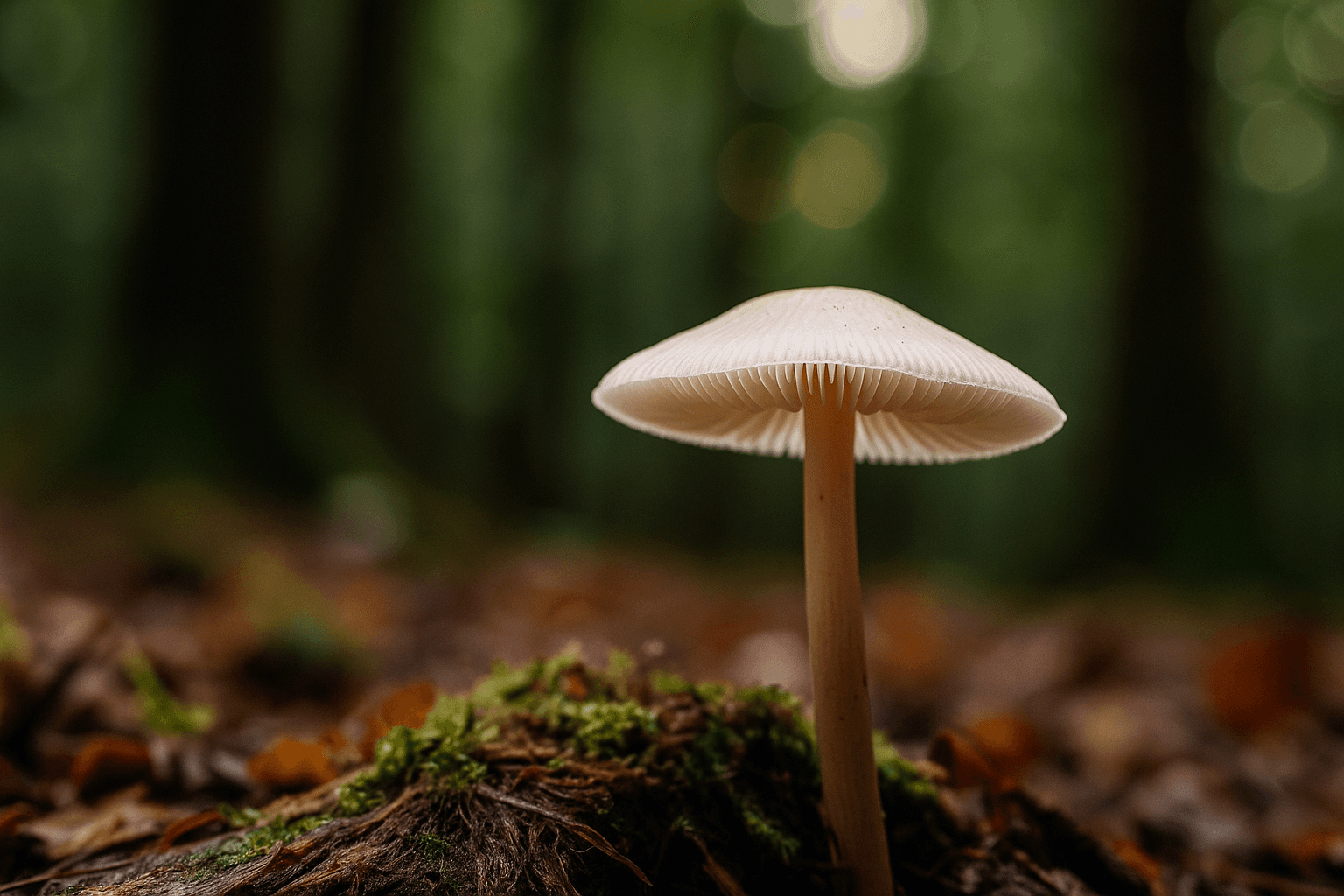
Every monsoon, India’s forests, fields, and even backyard lawns suddenly erupt with mushrooms. Overnight, the ground transforms into a carpet of strange umbrella-like forms. To the untrained eye, it looks like magic — but the real explanation lies in the hidden life of fungi.
The Concept: Mushrooms as Nature’s Hidden Gardeners
Mushrooms are the fruiting bodies of fungi, just like mangoes are the fruit of a mango tree. But unlike trees, most of the fungus lives out of sight. Under the soil, wood, or leaf litter lies a vast network of thread-like filaments called mycelium.
Think of the mycelium as the underground “plant,” and the mushroom as just the seasonal “flower” it produces. For most of the year, the mycelium quietly feeds, breaking down organic matter like fallen leaves and dead wood. When the right mix of temperature, humidity, and rainwater arrives, the fungus rapidly sends up mushrooms to release spores — tiny dust-like particles that act as its seeds.
Analogy: It’s like a theatre performance where the stage is set long before the curtain rises. The rain doesn’t create mushrooms overnight; it just gives the signal for the hidden actors (the fungi) to finally step into the spotlight.
Why It Matters
-
Ecological Importance: Mushrooms recycle nutrients, break down dead matter, and help plants thrive through underground partnerships with roots.
-
Food and Culture: In Himachal, Nagaland, and Kerala, wild mushrooms are collected as seasonal delicacies. Globally, they are billion-dollar industries.
-
Medicine and Science: Fungi gave the world penicillin and are studied for cancer drugs, cholesterol treatments, and mental health research.
-
Caution: Some wild mushrooms are toxic and resemble edible ones. Foraging without expertise can be deadly.
Background: Why After the Rains?
-
Moisture Trigger: Mycelium needs high humidity to fruit.
-
Temperature Window: Rains cool the soil, creating ideal conditions.
-
Speed of Growth: Mushrooms can expand up to 2 cm per hour, explaining the “overnight” effect.
-
Spore Dispersal: Damp air helps spores travel further.
Analogy: Just like a pressure cooker whistles only when the right pressure is reached, mushrooms burst out only when nature’s conditions align.
Human Connections
-
India: Tribes in Chhattisgarh and Odisha sell wild mushrooms in markets; farmers in Punjab and Haryana cultivate button mushrooms commercially.
-
Global: Japan and China dominate farming, while Europe prizes seasonal porcini and truffles.
-
Tradition: Ancient Ayurveda mentions fungi in medicinal contexts, though with caution.
Implications and Applications
-
Sustainable Food: High protein and low resource use make mushrooms a climate-friendly food.
-
Environmental Solutions: Mycelium is tested as biodegradable packaging and in cleaning polluted soils.
-
Climate Change Concerns: Loss of forests and warming threaten fungal diversity, risking ecosystem health.
Conclusion
Mushrooms remind us that nature’s most powerful workers often remain unseen. What we admire after a rainstorm is just the tip of a much larger story — a hidden network recycling life, partnering with trees, and shaping our environment.