

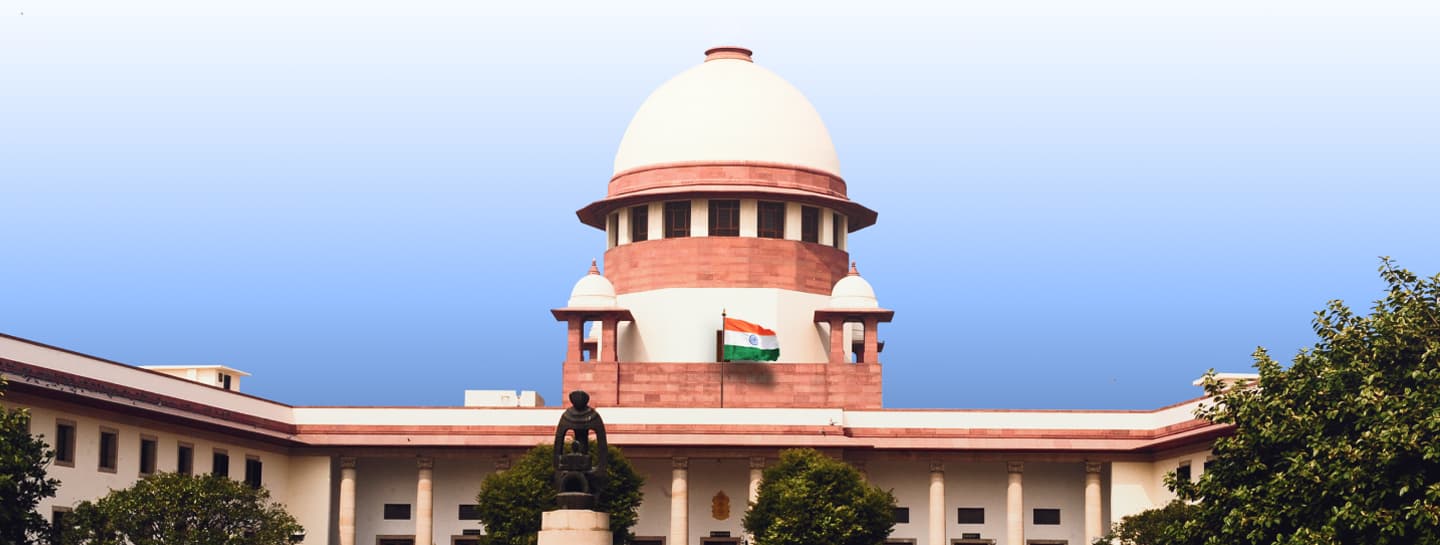
The Supreme Court’s September 1 judgment requiring all in-service teachers from Classes 1–8 in non-minority schools to qualify the Teachers’ Eligibility Test (TET) within two years has triggered nationwide concern. Tamil Nadu, employing nearly 4.5 lakh teachers, has warned that the order could empty classrooms and jeopardise the constitutional right to education.
The Story
The two-judge Bench of Justices Dipankar Datta and Manmohan ruled that all teachers with more than five years of service remaining must clear the TET within two years or face compulsory retirement. Those with less than five years left until retirement are exempt but will need TET qualification for any promotion.
The judgment was delivered on a batch of appeals challenging the insistence on TET qualification in minority schools. While the court recognised the contributions of teachers appointed before the Right of Children to Free and Compulsory Education (RTE) Act, 2009, it maintained that teacher quality is central to the right to education.
It also referred to a larger Bench the question of whether minority institutions should be brought under the RTE framework, observing that excluding them weakens the “common schooling vision” envisaged under Article 21A.
Why It Matters
Tamil Nadu, with 3.9 lakh of its 4.5 lakh government and aided school teachers currently non-TET qualified, argues that the judgment could collapse the education system. Teachers who fail to qualify within two years would be retired or disqualified, leaving millions of children without instructors.
The State contends that the judgment, though well-intentioned, conflicts with Article 21A, which guarantees every child the fundamental right to free and compulsory education between ages 6 and 14. The fear is that enforcing the TET condition immediately could violate the same constitutional mandate it seeks to uphold.
What Article 21A Says
Inserted by the 86th Constitutional Amendment (2002), Article 21A mandates that “the State shall provide free and compulsory education to all children of the age of six to fourteen years in such manner as the State may, by law, determine.”
It forms the basis of the RTE Act, 2009, which operationalises this right, laying down norms for infrastructure, pupil–teacher ratios, and teacher qualifications.
The Legal Basis and Controversy
The TET requirement arises from Section 23(1) of the RTE Act, under which the National Council for Teacher Education (NCTE) prescribes minimum qualifications. A notification dated August 23, 2010, made TET mandatory for all new appointments.
However, Tamil Nadu and Kerala argue that Section 23(1) applies only to future recruitment, not to those already validly appointed before the RTE Act. They point to Section 23(2), which allows the Central government to relax the qualifications for up to five years if States face teacher shortages.
The State’s review petition contends that applying the rule retrospectively amounts to “manifestly disproportionate punishment” for teachers who have served decades without complaint.
The Court’s Reasoning
Justice Datta acknowledged that the order may seem harsh but justified it as essential for maintaining educational standards. The Bench noted that teachers are the “bedrock of Article 21A”, and ensuring their competence is necessary to make the right to education meaningful.
At the same time, the judgment provided limited relief through exemptions for those nearing retirement and by extending the compliance period to two years.
The court also questioned the 2014 Constitution Bench ruling in Pramati Educational and Cultural Trust v. Union of India, which exempted minority institutions from the RTE Act. It observed that this exemption “jeopardised the idea of universality” in elementary education.
Tamil Nadu’s Review Petition
Tamil Nadu has sought a review of the judgment, warning that its implementation would:
-
Destabilise the teaching workforce, as nearly 90% of its teachers lack TET certification.
-
Violate Article 21A, leading to classroom shortages and disruption of learning.
-
Ignore alternative reforms, such as in-service training, refresher courses, and bridge programmes that could improve teaching quality without mass terminations.
The petition calls for a “balanced approach” that strengthens teacher competence while ensuring uninterrupted schooling.
Situation in Other States
Tamil Nadu is not alone. States such as Kerala, Bihar, and West Bengal also employ large numbers of non-TET-qualified teachers. Many have indicated plans to join the review process or seek extensions, citing similar challenges.
Even States that have implemented TET over the past decade face low pass rates — often below 20% — due to exam difficulty and limited preparatory infrastructure, especially for rural teachers.
Are Minority Institutions Included?
Not yet. The September 1 ruling stops short of extending TET to minority-run institutions, but the Bench’s referral to a larger Bench indicates a possible future shift. The judges noted that misuse of minority status to avoid RTE compliance is widespread and urged reconsideration of the 2014 precedent.
If upheld, such an expansion could bring all schools — government, aided, private, and minority — under a uniform qualification regime, reshaping India’s educational landscape.
Implications
-
Immediate risk: Potential mass retirement of teachers and disruption in public schools.
-
Systemic concern: Balancing teacher qualification with constitutional access to education.
-
Policy challenge: Creating continuous professional development frameworks instead of one-time qualification mandates.
Experts argue that the focus should shift from punitive enforcement to capacity-building and accountability, ensuring that teacher quality improves without dismantling the workforce.
Conclusion
The Supreme Court’s TET directive underscores India’s commitment to quality education but exposes the fragile equilibrium between teacher standards and educational access. Tamil Nadu’s plea captures the dilemma: enforcing uniform benchmarks without addressing structural shortages risks turning classrooms empty — and a constitutional right hollow.