

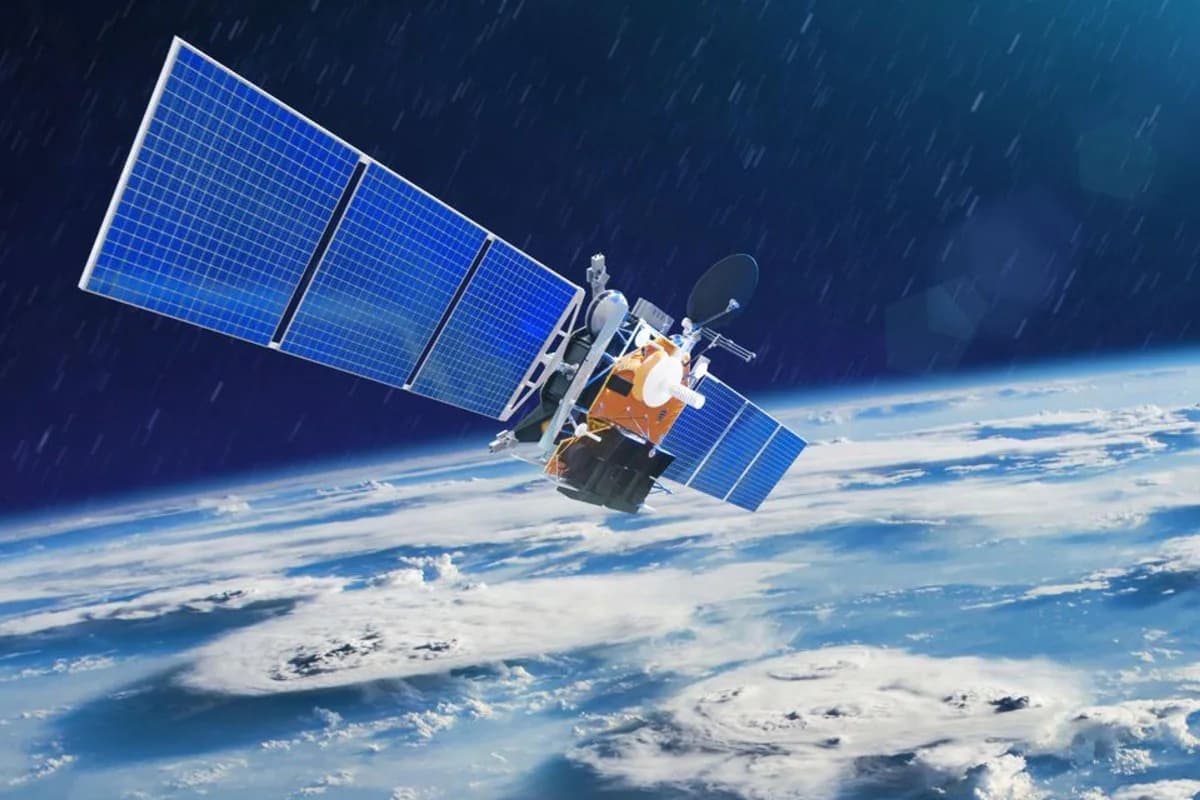
Bengaluru, Sept. 28, 2025 — India’s first space-based astronomy observatory, AstroSat, has completed ten years in orbit, doubling its intended mission life and cementing its place as a cornerstone of Indian space science. Since launch in 2015, the observatory has provided pathbreaking data on black holes, neutron stars, and galaxies billions of light years away.
Launched on 28 September 2015 aboard a PSLV-C30 (XL) rocket from the Satish Dhawan Space Centre, AstroSat was the Indian Space Research Organisation’s (ISRO) first dedicated multi-wavelength observatory. It remains operational after ten years, making significant contributions to the study of cosmic phenomena.
In a commemorative post, ISRO said: “From black holes to neutron stars, from the nearest star Proxima Centauri to the first-time detection of FUV photons from galaxies 9.3 billion light years away, AstroSat enabled groundbreaking insights across the electromagnetic spectrum from UV/Visible to high-energy X-rays.”
Five Payloads, Wide Spectrum
AstroSat carries five scientific payloads that enable simultaneous observation across multiple bands of the electromagnetic spectrum:
-
Ultra Violet Imaging Telescope (UVIT) – studies stars, galaxies, and star-forming regions in UV and visible light.
-
Large Area X-ray Proportional Counter (LAXPC) – investigates variability of X-ray sources like black holes and neutron stars.
-
Cadmium–Zinc–Telluride Imager (CZTI) – detects hard X-rays and helps measure cosmic gamma-ray bursts.
-
Soft X-ray Telescope (SXT) – maps soft X-ray sources with focusing optics.
-
Scanning Sky Monitor (SSM) – scans the sky for new and variable X-ray sources.
Major Achievements
In the past decade, AstroSat has:
-
Observed stellar explosions, pulsars, and quasars.
-
Detected ultraviolet photons from galaxies 9.3 billion light years away, a first for an Indian mission.
-
Provided long-term monitoring of black hole binaries and neutron stars.
-
Offered valuable data for more than 1,500 research papers, including studies led by global scientists.
Collaborative Effort
AstroSat was built by ISRO in partnership with leading Indian institutions, including the Inter-University Centre for Astronomy and Astrophysics (IUCAA), Tata Institute of Fundamental Research (TIFR), Indian Institute of Astrophysics (IIA), Raman Research Institute (RRI), along with contributions from Canadian and U.K. partners.
Looking Ahead
Despite being designed for five years, AstroSat remains healthy and productive. Its success has boosted India’s confidence in pursuing future space-based observatories. ISRO is now working on the XPoSat mission, focused on X-ray polarization studies, and long-term plans for advanced astronomy satellites are under discussion.