
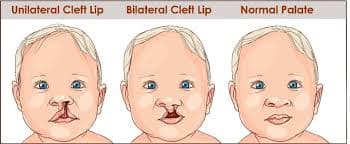
A cleft lip or cleft palate is often mistaken for a “cosmetic deformity”. In reality, it is a functional health condition that shapes a child’s ability to feed, grow, speak, hear, and breathe, and it influences schooling, dignity, and future livelihood. India’s tragedy is not the absence of surgical skill. It is the absence of a predictable public system that finds these children early, treats them on time, and supports them till rehabilitation is complete.
What’s in the news
Over the last 25 years, NGOs such as Smile Train and other cleft missions have supported large volumes of corrective surgeries in India and helped train and partner with surgeons and hospitals. Yet India continues to record the highest number of cleft births globally, while national epidemiological data remains limited and care remains uneven, especially outside major cities.
Background and context
Cleft lip and/or palate occurs when facial structures do not fuse during pregnancy, influenced by genetic factors and maternal nutrition deficiencies. Independent estimates suggest around 36,000 babies are born with cleft abnormalities in India each year, roughly aligning with the commonly cited ratio of one in 700 births. Many cases are detected in government hospitals, but families often confront three barriers immediately: inadequate counselling, high out-of-pocket cost, and the distance to specialised centres.
The outcome is a dual deficit. First, children who could have been treated early reach school age with uncorrected clefts and avoidable speech and nutrition problems. Second, even when surgery is arranged, follow-up services like speech therapy, audiology support, dental care, and psychosocial counselling remain patchy. The condition becomes a lifelong disadvantage created not by biology alone, but by missed opportunities in the health system.
Key details / key gaps
India has seen extensive NGO-led support for cleft surgeries, running into lakhs over two decades, and this deserves due recognition. But the national gap persists because the burden is large, the pipeline is weak, and the continuum of care is incomplete.
A critical gap is data. Without consistent registration of craniofacial anomalies and public aggregation of government hospital caseloads, planning remains guesswork. The system also under-invests in the “middle” of care: referral mapping from delivery points to surgical centres, predictable financing, travel and stay support for poor families, and structured rehabilitation.
Finally, there is a clear rural-urban divide. With a large share of India’s population living outside major cities, dependence on city-based private hospital partnerships, however valuable, cannot substitute for district-level readiness.
Why it matters
Treating cleft care as a public health priority pays dividends across domains.
Child survival and nutrition: infants with cleft conditions can struggle with feeding. When surgery and nutrition support are delayed, the risk of malnutrition rises, especially among under-five children. Timely intervention is not just restorative, it can be life-protective.
Education and human capital: speech and hearing challenges can push children into poor learning outcomes and social exclusion. Bullying and stigma erode confidence early, narrowing aspirations.
Economic participation and dignity: untreated clefts can affect employability and social integration, particularly in communities where appearance-based stigma is strong. This is a silent drain on productivity and wellbeing, concentrated among the most vulnerable households.
Health system credibility: when a birth defect that is treatable is allowed to persist at scale, it signals that public health is still not designed around the last mile.
Arguments for and against
The case for prioritising cleft care within public health is strong: it is a high-impact, time-sensitive intervention with measurable outcomes and a clear rehabilitation pathway. It aligns with child health, nutrition goals, disability inclusion, and equitable healthcare access.
The counter-argument is usually fiscal and administrative: district hospitals are already stretched, specialists are scarce, and adding another assured service could dilute focus. There is also a tendency to view NGO-led missions as “good enough”.
But this is precisely the misread. NGO models are best seen as accelerators and capacity builders, not as substitutes for state responsibility. When the underlying pipeline remains weak, even impressive surgery counts do not translate into universal coverage.
Constitutional / legal angle
Cleft care sits at the intersection of healthcare access and disability inclusion. The broader legal and policy principle is that preventable, treatable health impairments should not become permanent disabilities due to system failure. Recognising craniofacial anomalies within public health reporting and ensuring non-discriminatory access to corrective and rehabilitative services strengthens the state’s duty to ensure dignity and equal opportunity in practice, not only on paper.
Implications
If cleft care remains mission-led and urban-centred, India will continue to carry a backlog, with children arriving late for surgery and doing without speech and hearing support. Over time, this creates a pipeline of avoidable learning deficits and social exclusion.
If cleft care is integrated into routine maternal and child health systems, the gains compound: early identification, timely surgery, better nutrition outcomes, stronger speech development, and reduced stigma. It also strengthens surgical infrastructure and referral systems that can serve other paediatric and congenital conditions.
Way ahead
India does not need a grand new slogan. It needs an assured pathway that works from birth onward.
First, cleft conditions must be treated as a core child health issue, not a cosmetic concern. This begins at the delivery point: counselling, feeding guidance, and immediate referral mapping should be standard in facilities where births occur.
Second, the screening-to-surgery pipeline needs district-level clarity. Programmes that already touch the last mile, including child health screening platforms and frontline health workers, should be aligned to ensure early detection, family handholding, and reliable follow-through.
Third, financing must cover the real cost for the poor family, not only the surgical fee. Travel, stay, nutrition support, and follow-up therapy are often the difference between completion and dropout.
Fourth, rehabilitation must be treated as part of treatment. Speech therapy, hearing assessment, dental and orthodontic support, and psychosocial counselling should be bundled as a continuum, with clear referral linkages and predictable scheduling.
Finally, India should build a credible national picture through consistent reporting and public aggregation of cleft cases and outcomes. What is not counted is rarely prioritised. What is prioritised can be fixed.
Source credits
The Hindu; Smile Train; Mission Smile; Operation Smile; Transforming Cleft; Healing Smile Foundation; World Health Organization; NITI Aayog; Rashtriya Bal Swasthya Karyakram; UNICEF; National Family Health Survey; Lancet Surgery Commission; Institute for Health Metrics and Evaluation, University of Washington School of Medicine.