

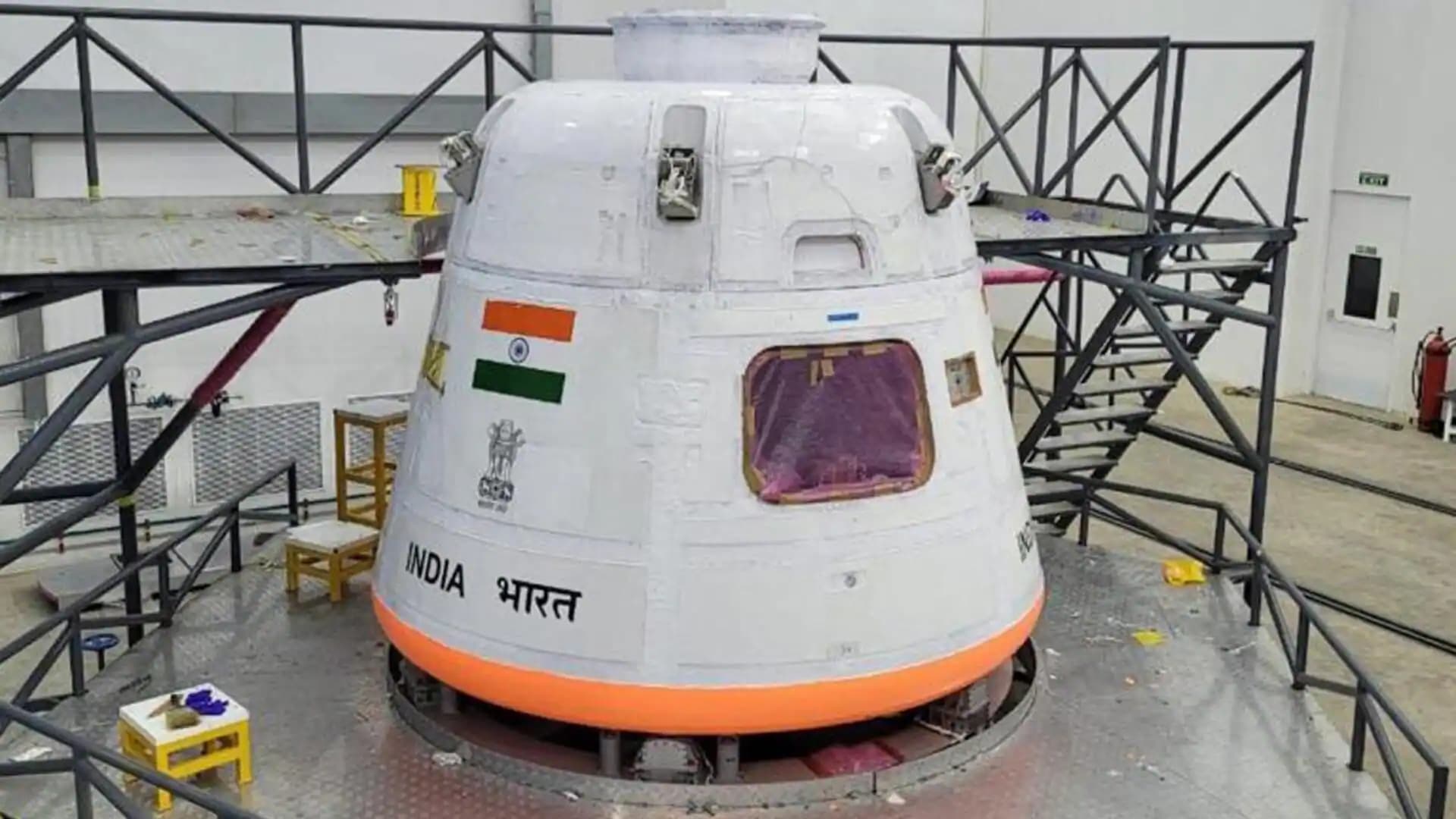
Why a Crew Escape System is essential
-
Highest risk window: From liftoff through the lower atmosphere the rocket experiences max aerodynamic pressure and rising dynamic loads; HLVM3’s S200 solid boosters cannot be shut down after ignition.
-
Goal: If sensors detect a serious anomaly, abort immediately, outrun the rocket, and put the crew at a safe distance fast enough to beat any cascading failure (fire, breakup, loss of control).
What the CES is and how it works
-
Architecture: A puller-type tower atop the crew module with high-thrust solid motors. When fired, it produces accelerations up to ~10 g for a few seconds—tolerable if astronauts are reclined with acceleration acting across the chest (“child-in-cradle” orientation).
-
Separation & safeing: The tower pulls the crew module (CM) off the stack, then jettisons.
-
Descent system: The CM deploys a multistage parachute sequence (drogue → mains) to slow for a sea splashdown, keeping vertical impact within human limits.
Who decides to abort?
-
Integrated Vehicle Health Management (IVHM): A network of sensors, avionics and software monitors propulsion, guidance, structures, power, and crew health in real time to trigger the CES automatically; the crew can also command an abort.
Puller vs pusher (and why ISRO chose puller)
-
Puller (Gaganyaan): Simple, robust solid motors in a tower; keeps hot plumes away from the capsule, proven heritage; adds mass and changes aerodynamics.
-
Pusher (e.g., SpaceX): Side-mounted liquid thrusters that push the capsule away; reusable and doubles as on-orbit maneuvering, but higher integration complexity and plume/thermal management around the capsule.
Test campaign so far
-
Dedicated Test Vehicle (TV-D) with Vikas engine validates abort logic and separation under realistic loads.
-
First success (Oct 2023): CES triggered near transonic conditions; clean separation and recovery.
-
Next steps: Additional TV flights to cover other ascent corners—pad abort, max-Q, high-dynamic-pressure, off-nominal thrust and guidance failures—before piloted missions.
What happens after splashdown
-
Recovery ops: Naval/Coast Guard teams home in via beacons; the capsule is safed, flotation aids keep it upright, and crew egress is conducted per medical protocols.
Big picture
-
Rockets are less reliable than airliners; a well-tested CES sharply raises survival odds during the riskiest minutes of flight. For ISRO, it’s the cornerstone that enables India’s first human spaceflight to low-Earth orbit with a credible safety case.
Source: The Hindu