

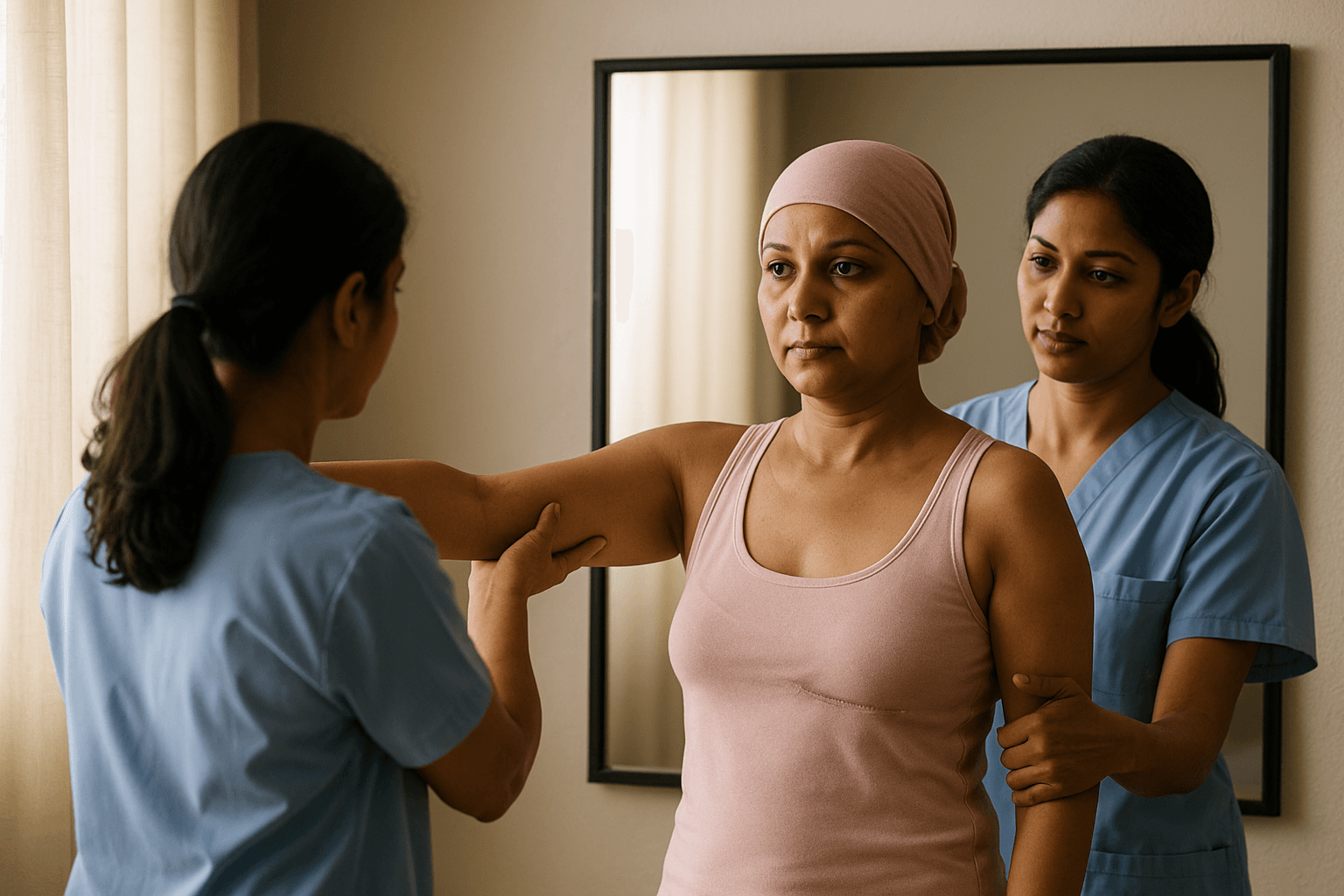
Outcomes for breast cancer are improving, but healing is more than scars fading. It’s drains and dressings, strength work and sleep hygiene, intimacy relearning and body acceptance. This expanded guide distils what typically helps—so you can make informed, values-aligned choices whether you reconstruct, go flat, or wait and see.
1) What the first 12 weeks often look like
Week 0–2 (hospital → home):
-
Pain control as prescribed; drain care if present; short walks at home; gentle hand-to-shoulder range-of-motion (no heavy lifting).
-
Sleep with upper body slightly elevated; keep the arm on surgery side supported.
Week 2–6:
-
Add light shoulder stretches, wall crawls, and posture work; scar care once incision is closed (as advised).
-
Many resume desk work around 3–4 weeks if energy permits; driving only when off sedating meds and safe to shoulder-check.
Week 6–12:
-
Progress to resistance bands/light weights; resume most daily activities; discuss timing for swimming, gym, or yoga with your team.
-
If you had axillary node surgery or radiation, expect slower range-of-motion gains—be patient and consistent.
Red flags (call your team): Fever, wound redness spreading, foul discharge, sudden arm swelling or tightness, shortness of breath, calf pain, uncontrolled pain.
2) Lymphoedema & shoulder mobility: protect and strengthen
-
Prevention basics: Avoid blood draws/BP cuffs on the surgery side when possible; moisturise skin; treat cuts promptly; use sun/bug protection.
-
Movement rules: “Frequent and gentle” beats “rare and intense.” Aim for daily shoulder mobility + posture drills.
-
If swelling/tightness begins: Ask for referral to a certified lymphoedema therapist for manual lymph drainage, compression options, and exercise progression.
-
Cording (axillary web syndrome): Feels like a “tight cord” in the armpit/arm; targeted physio loosens it safely—don’t force stretch through pain.
3) Reconstruction—or going flat: a quick decision matrix
You can reconstruct immediately, delay it, or choose to go flat. All are valid.
Implant-based:
-
Pros: Shorter initial surgery; no large donor site.
-
Cons: May need future revisions; radiation can affect outcomes; some dislike the feel.
Autologous (your tissue): DIEP, TRAM, latissimus dorsi, etc.
-
Pros: More natural look/feel; ages with you; no implant maintenance.
-
Cons: Longer surgery/recovery; donor-site scar; not always available/eligible.
Going flat:
-
Pros: One and done; fewer procedures; easier exercise/clothing for many; clear body autonomy.
-
Cons: Some miss volume/contour; prostheses may be wanted for certain outfits.
Timing considerations:
-
Radiation planned? Many surgeons prefer delayed implant reconstruction or recommend autologous options later.
-
Diabetes/smoking/connective-tissue disorders may tilt the calculus toward simpler surgeries.
4) Bras, prostheses & clothing hacks
-
Post-op bras: Front-closure, soft, wireless, wide straps; size for swelling.
-
External prostheses: Lightweight foam for early weeks; silicone forms later. Use pocketed bras or stick-on options as comfort allows.
-
Style tips: Structured fabrics, draped necklines, patterned tops, and asymmetrical layers create balance. If going flat, many love fitted tees with strong shoulders.
5) Intimacy & sexual health—relearning closeness
-
Talk first: Agree on signals, pacing, and consent. Start with non-sexual touch, cuddling, and breath sync.
-
Chest wall sensitivity: Desensitisation helps—gentle touch with different textures, warmth/coolth, and gradual pressure.
-
Vaginal health (if on endocrine therapy): Hydration, regular sexual activity or pelvic floor therapy can maintain tissue health. Lubricants/moisturisers help; discuss any hormonal products with your oncologist.
-
Re-map pleasure: Explore erogenous zones beyond the chest—neck, ears, inner arms, back of knees, feet.
-
Couples counselling: A few sessions can transform communication and rebuild safety.
6) Mindset & body image
-
Body neutrality → acceptance: You don’t have to love every change; aim first for respect and care.
-
Mirror work: 2–3 minutes/day with compassionate self-talk; name one function your body serves well (strength, healing, movement).
-
Micro-wins journal: Track small gains (extra degree of shoulder reach, better sleep, first walk outdoors).
-
Community: Survivor circles reduce isolation and offer practical hacks you won’t get from manuals.
7) Food, sleep, movement: simple, sustainable rules
-
Protein target: As guided by your team; often 1.0–1.2 g/kg/day during healing. Pair with fibre, fruits/veg, and fluids.
-
Alcohol & tobacco: Best minimised/avoided; they impair recovery.
-
Sleep: Protect a 7–9 hour window; side-sleep with pillows under the arm and between knees.
8) Work, travel & daily life admin
-
Return to work: Phase back—half-days → full days; prioritise lunch + short movement breaks.
-
Travel: Ask about fit-to-fly timing; consider compression sleeve for long flights if you had node surgery.
-
Paperwork: Keep a binder (diagnosis, surgeries, pathology, treatments, meds, allergies). It streamlines future care.
9) Talking to children & family
-
Young kids: Simple, honest language (“The doctor removed a part that was making me sick”).
-
Teens: Offer facts and space; invite questions; share the plan for help at home.
-
Extended family: Give one “update message” others can forward—reduces your cognitive load.
10) Questions to bring to your next appointment
-
What shoulder/arm exercises should I start this week?
-
Do I need a lymphoedema baseline measurement?
-
Is reconstruction (now/later) appropriate for my case? If later, what’s the ideal window?
-
Which bra/prosthesis can I use and when?
-
What signs mean I should call the clinic urgently?
-
If I’m on endocrine therapy, what are my options for sexual/vaginal comfort?
-
When can I resume swimming/gym/yoga? Any restrictions?
30-day micro-plan (printable)
-
Daily: 2–3 short walks, posture check, mindful breath (3 mins), gratitude note.
-
Mon/Wed/Fri: Shoulder mobility set + gentle band work (post clearance).
-
Tue/Thu/Sat: Scar care (when healed), relaxation audio, journal entry.
-
Sun: Social touchpoint (call, tea with a friend, or support group check-in).
Bottom line
Whether you reconstruct, go flat, or take your time, there’s no one “right” way to look or feel after a mastectomy. Recovery is a series of small, compassionate choices—medical, practical, intimate—that add up to agency, dignity, and a life you own on your terms.