Particles can cross barriers they cannot classically climb, a quantum process called tunnelling. The Nobel laureates showed that the same logic can govern a complete electrical circuit built from superconductors. By isolating and probing a Josephson junction at millikelvin temperatures, they observed macroscopic quantum tunnelling and discrete energy levels, turning a tabletop device into a bona fide quantum system.
The Story
What is macroscopic quantum tunnelling
In a classical picture, a system stuck in an energy valley remains trapped unless heated or driven hard enough to climb the barrier. In the quantum picture, the system has a small probability to appear on the other side. When the variable that tunnels is not a single electron but a collective circuit variable, such as the quantum phase across a Josephson junction, the effect is called macroscopic quantum tunnelling.
What is a Josephson junction
A Josephson junction places a thin insulator between two superconductors. Pairs of electrons move without resistance and share a collective quantum phase on each side. The phase difference controls a supercurrent through the insulator. In a tilted washboard potential set by a bias current, the phase can be trapped in a valley. It escapes either by thermal activation or by quantum tunnelling, which produces a sudden finite voltage across the junction.
What the laureates did
Early searches were foiled by stray microwaves and poor filtering. Clarke, Devoret and Martinis rebuilt the measurement chain, added cryogenic filtering and shielding, and operated at very low temperatures. They mapped the escape rate of the junction as a function of temperature and bias. At low enough temperatures the escape became temperature independent, the hallmark of tunnelling rather than thermal hopping.
They then sent in faint microwaves and saw resonant enhancements in the escape rate at specific frequencies. These resonances corresponded to transitions between discrete energy levels of the trapped phase. The circuit behaved like a quantum particle with quantised states, and the levels could be driven and read with microwaves.
Concept in Plain English
Think of the phase in a Josephson junction as a tiny bead sitting in a corrugated ramp. Classically the bead rolls only if the ramp is tilted enough. Quantum mechanics allows the bead to appear in the next groove without rolling over the ridge. Shine microwaves with just the right pitch and you can nudge the bead up one step, then watch how often it escapes. The pattern of nudges and escapes reveals the energy steps of the bead.
Why the Circuit Was Fragile
Quantum states are easily disturbed by environmental noise. Stray microwave photons mimic heating. The laureates suppressed noise with cold attenuators, low pass and band pass filters, superconducting shields, and meticulous grounding. Once the environment was quiet, the junction revealed tunnelling rates and level spacings that matched quantum predictions.
What the Three Laureates Researched
• John Clarke refined ultra sensitive superconducting measurements and noise control that made quantum signatures in circuits unambiguous.
• Michel Devoret developed the theory and experiments of quantum behaviour in mesoscopic circuits and pioneered tools for quantum limited amplification and readout.
• John Martinis demonstrated discrete energy levels, coherent control and later engineered superconducting qubits and multiqubit processors that built on the same physics.
From Discovery to Technology
What can a Josephson circuit mimic
A biased Josephson junction with the phase trapped in a well forms an artificial atom. The two lowest energy levels act as a qubit. Microwaves drive transitions between levels. The selection rules and anharmonic spacing let engineers address one transition without exciting the rest, which is essential for coherent control.
How this opens doors to information technologies
-
Circuit quantum electrodynamics
Coupling the junction based qubit to a microwave resonator creates a light matter hybrid where energy swaps between qubit and cavity. The resonator’s frequency shifts slightly depending on the qubit state, which enables quantum non demolishing readout. This architecture is the backbone of superconducting quantum processors. -
Quantum limited amplification
Josephson parametric amplifiers boost tiny microwave signals while adding near minimal noise, critical for fast, accurate qubit readout and for faint signal detection in astronomy and dark matter searches. -
Quantum sensing and metrology
Josephson devices underpin the most precise current and voltage standards and enable ultrasensitive magnetometers. Tunable junction circuits serve as spectrometers for weak microwave fields. -
Microwave to optical links
Engineered circuits that combine Josephson elements with piezoelectric or electro optic devices can convert microwave qubit states into optical photons that travel through fibre, a step toward modular quantum networks. -
Quantum simulation
Arrays of superconducting circuits emulate complex Hamiltonians, allowing studies of many body physics and materials under controlled conditions.
How This Helps Superconducting Quantum Processors
• Define qubits
An anharmonic Josephson oscillator provides two well separated levels with microwave addressability.
• Control and gates
Fast pulses rotate the qubit state, while capacitive or inductive coupling enables two qubit gates via controlled exchange of excitations.
• Readout
Dispersive coupling to a resonator shifts its frequency by an amount tied to the qubit state. Measuring the resonator reveals the state without destroying it.
• Noise engineering
The laureates’ filtering and shielding playbook is now standard practice, improving coherence times by reducing dephasing and relaxation.
• Scalability
Lithographic fabrication places many junctions and resonators on a single chip, allows multiplexed readout, and supports error correction codes that need dozens to hundreds of coupled qubits.
Why It Matters
Scientific significance
They proved that a macroscopic variable can obey quantum rules, not only in fleeting signatures but in controllable, addressable states. This closed a conceptual gap between atomic scale quantum physics and engineered devices.
Technological significance
Their work created a template to build, control and read quantum circuits with tools from radio frequency engineering. The same discipline now powers leading quantum computing and sensing platforms.
Economic and strategic significance
Quantum processors, amplifiers and sensors are dual use technologies. Nations and firms that master low noise superconducting circuits gain advantages in secure communications, navigation, materials discovery and climate relevant sensing.
Background and Timeline
• 1962, theoretical prediction of Josephson tunnelling between superconductors.
• 1970s, extended efforts to see quantum effects in junctions, limited by noise.
• Early 1980s, refined experiments distinguish thermal activation from tunnelling in escape statistics.
• Late 1980s to 1990s, observation of discrete levels and microwave driven transitions in current biased junctions.
• 2000s onward, circuit QED shows strong coupling between qubits and on chip cavities, enabling high fidelity control and readout.
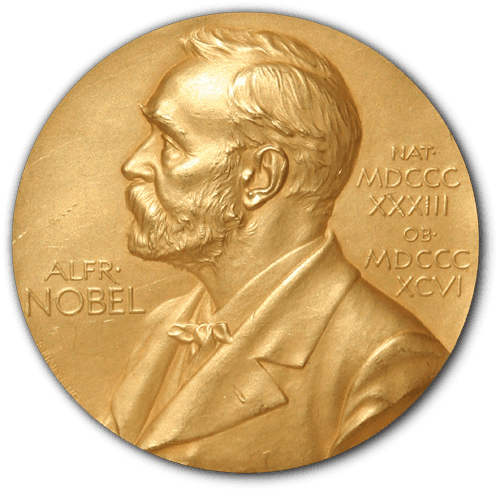
• 2025, Nobel Prize recognises the pioneers of macroscopic quantum tunnelling and its control in circuits.
Implications and Open Questions
• Extending coherence requires better materials, cleaner interfaces and 3D shielding, since loss and defects still limit performance.
• Scaling to error corrected systems needs uniform junctions, stable couplers and low cross talk at chip and cryostat scale.
• Hybrid integration with semiconductors, spins or photonics could combine fast control with long memories and long distance links.
• Quantum limited sensors will continue to push astronomy and fundamental physics, for example axion searches and gravitational wave detection at microwave frequencies.
Conclusion
By showing that a visible circuit can tunnel and climb energy ladders as if it were a single quantum particle, Clarke, Devoret and Martinis transformed quantum mechanics from a story of atoms into a craft of chips. Their precision in isolation, control and readout became the operating manual for superconducting qubits. The same principles now guide quantum processors, amplifiers and sensors that turn fragile quantum effects into practical tools.