

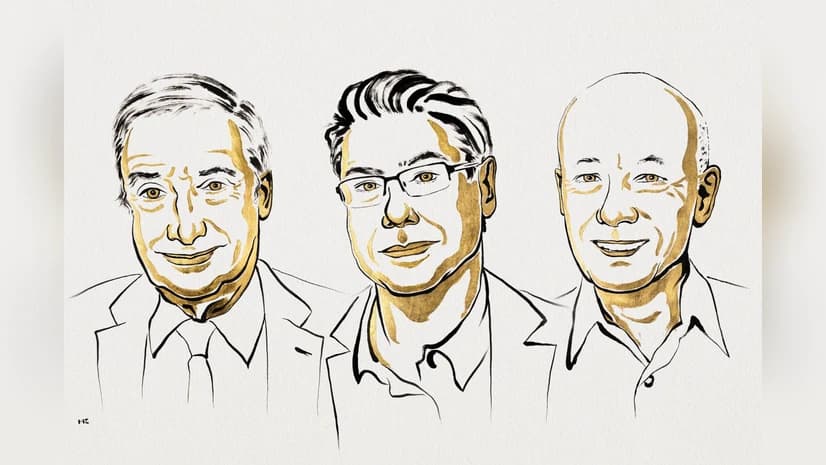
Growth used to be rare; stagnation the norm. This year’s Nobel economics prize recognises a simple but transformative insight: sustained prosperity rests on a self-renewing engine of innovation, where new ideas and firms continuously replace old ones. The laureates show not only why this engine works, but how policy can fuel it without stalling inclusion.
What each laureate contributed
Joel Mokyr: how a culture of ideas becomes technology
Mokyr’s economic history explains why the West’s “industrial enlightenment” broke millennia of stagnation. He connects useful knowledge (science, tinkering, codified techniques) with institutions and beliefs that let ideas spread—learned societies, open inquiry, lower guild barriers, and incentives for experimenters. Takeaway: innovation flourishes when societies honour problem-solvers, diffuse know-how, and reduce vetoes that block new techniques.
Aghion–Howitt: a formal engine of creative destruction
Their Schumpeterian growth model (1992 onwards) shows:
-
Firms invest in R&D to “leapfrog” incumbents; successful innovation raises productivity but renders older technologies obsolete.
-
Competition has a non-linear effect: too little → complacency; too much → kills rents that fund R&D. The “escape competition” margin means well-designed rivalry can raise innovation.
-
Frontier vs catching-up: frontier economies need policies that push the frontier (R&D, top-tier universities, venture finance), while followers gain from technology adoption and management quality.
-
Reallocation is central: productivity rises when capital and labour move from laggards to leaders—which demands bankruptcy resolution, flexible product markets, and active competition law.
Why it matters now
-
Productivity slowdown: Many economies face weak TFP growth; the work pinpoints levers—competition, R&D incentives, diffusion.
-
Green transition: Carbon pricing and mission-oriented R&D can tilt innovation toward clean tech while letting creative destruction retire brown assets.
-
AI/GenAI: Policies should amplify diffusion to lagging firms, retraining, and guard against superstar choke-points that entrench market power.
-
Resilience: Diverse, competitive ecosystems recover faster from shocks than protected oligopolies.
Policy playbook (applied to India)
-
Invest in ideas & diffusion
-
Triple-track: world-class labs, application-oriented institutes, and MSME extension (toolrooms, standards, design).
-
Public R&D matched with private co-funding; prize grants and SBIR-style contracts for startups.
-
-
Design competition to spur innovation
-
Stronger competition enforcement against killer acquisitions and data foreclosure.
-
Open standards and interoperability (digital public infrastructure) to lower entry barriers.
-
-
Finance the “valley of death”
-
Deepen venture debt, patient capital, and securitised IP lending; speed up government procurement for innovative firms.
-
-
Speed reallocation
-
Faster insolvency resolution; time-bound clearances; portability of benefits and skilling for workers moving across sectors.
-
-
Human capital at the frontier
-
STEM + managerial quality (apprenticeships, dual-track programs); AI literacy across clusters; attract global researchers with predictable visas and IP rules.
-
-
Green creative destruction
-
Predictable carbon/renewables policy; demand-pull (standards, public procurement) so clean tech scales fast enough to replace legacy assets.
-
Bottom line
Innovation is not a sideshow—it is the growth model. Mokyr shows why societies that respect and spread useful knowledge pull ahead; Aghion & Howitt show how competition, R&D and reallocation keep the engine humming. Countries that align these pillars will grow faster—and fairer—through the next wave of tech and climate transitions.
Source: The Hindu