

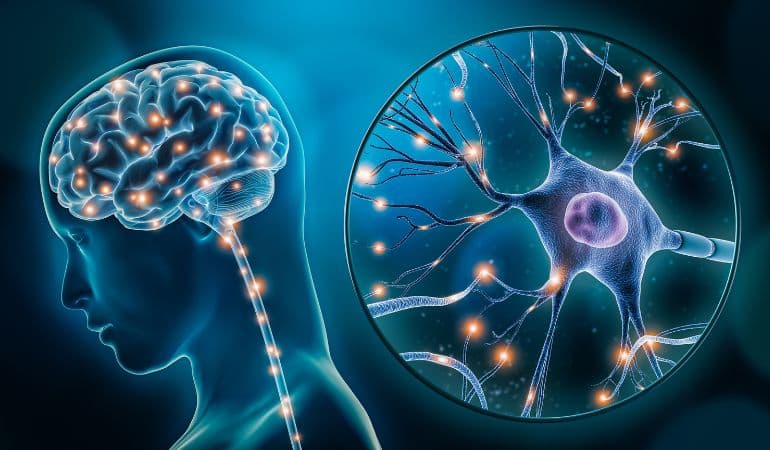
The human brain is often described as the final frontier. As neurotechnology advances, that frontier is no longer purely theoretical: we now have tools that can listen to brain signals, decode them and convert them into movement, speech or digital commands. For India, this is not just a scientific curiosity. It is a potential game-changer in healthcare, industry and strategic technology. Brain–Computer Interfaces (BCIs), which connect neural activity directly to computers or machines, are at the heart of this transformation. While the most dramatic headlines come from companies such as Neuralink, the deeper story is about how countries position themselves in this emerging domain. For India, with its rising neurological disease burden and strong base in AI and engineering, neurotechnology is both an urgent necessity and a strategic opportunity.
The Story
What is neurotechnology?
Neurotechnology is the use of mechanical or electronic tools to interact directly with the brain. These systems can:
-
Record brain activity,
-
Monitor patterns over time, or
-
Influence neural circuits through stimulation.
They combine advances in neuroscience, AI, engineering and computing, enabling devices that sense or stimulate brain signals in real time.
At the centre of this field is the Brain–Computer Interface (BCI). A BCI:
-
Detects electrical signals generated by neurons,
-
Uses algorithms to decode these signals, and
-
Translates them into commands for an external device — a cursor, wheelchair, robotic arm or prosthetic limb.
BCIs can be:
-
Non-invasive – using EEG headsets or external sensors; easier to deploy but less precise.
-
Implantable – using electrodes placed inside the brain; more precise but medically riskier.
Some devices are diagnostic, helping scientists study disorders such as epilepsy or cognitive decline. Others are therapeutic, allowing paralysed patients to move prosthetic limbs, or stimulating specific brain areas to treat conditions like Parkinson’s disease and depression.
Laboratory work has even linked the brains of two mice to transmit simple information. Human uses, however, remain largely rehabilitative and clinical for now.
Can BCIs be used for human enhancement or military advantage?
Technically, yes.
BCIs could, in principle, be used for:
-
Human enhancement – faster human–machine interaction, improved attention or memory, augmented performance in high-stress roles.
-
Military advantage – hands-free control of drones or unmanned systems, enhanced situational awareness, and advanced rehabilitation for injured soldiers.
But these possibilities raise serious questions about consent, privacy, coercion and dual use. The idea of enhancing or weaponising the brain will demand intense ethical debate and clear red lines before any deployment. For now, the most legitimate and urgent uses remain therapeutic and assistive, not enhancement.
Why does India need neurotechnology?
India faces a significant and growing burden of neurological disease. Between 1990 and 2019, the share of non-communicable and injury-related neurological disorders in the overall disease load has risen steadily, with stroke emerging as the largest contributor. Other conditions include:
-
Spinal cord injuries and paralysis,
-
Parkinson’s disease and movement disorders,
-
Depression and other mental health conditions,
-
Traumatic brain injuries from accidents.
Neurotechnology can help in several ways:
-
Neuroprosthetics can restore movement or communication for those with paralysis or locked-in states.
-
Targeted neural stimulation can reduce symptoms in depression or Parkinson’s disease, potentially cutting long-term dependence on heavy medication.
-
Tech-enabled rehabilitation can make recovery more intensive, personalised and accessible, especially for stroke patients.
Beyond healthcare, neurotechnology sits at the intersection of biotechnology, AI and engineering — all sectors where India is emerging as a serious player. This makes neurotech not only a health priority, but also an economic and technological opportunity.
Where does India stand today?
India is gradually building academic and private sector strengths in neurotechnology:
-
Research institutions
-
The National Brain Research Centre (NBRC), Manesar, and the Brain Research Centre at IISc Bengaluru are core neuroscience hubs.
-
IITs and medical schools are expanding work in neuroimaging, computational neuroscience and BCIs.
-
-
BCI-based rehabilitation
-
IIT Kanpur has demonstrated a BCI-driven robotic hand designed to assist stroke patients, showing clear domestic capability in neuroprosthetics and assistive devices.
-
-
Innovative startups
-
Companies like Dognosis are using neurotechnology to analyse brain signals in dogs, mapping the neural patterns when they detect cancer in human breath samples — an animal neurotech application with direct human diagnostic potential.
-
These efforts, though still early, signal that India has:
-
a large domestic patient pool for meaningful clinical translation.
How are other nations advancing?
Globally, neurotechnology has become a strategic priority.
-
United States
-
Leads in both public and private investments.
-
The BRAIN Initiative® (Brain Research through Advancing Innovative Neurotechnologies), led by the NIH and partners, aims to accelerate new tools for mapping and manipulating brain circuits.
-
Companies like Neuralink have secured regulatory approvals for in-human trials and have demonstrated BCI-enabled restoration of some motor functions in paralysed patients.
-
-
China
-
The China Brain Project (2016–2030) focuses on:
-
understanding cognition and brain function,
-
developing brain-inspired AI,
-
and building treatments for neurological disorders.
-
-
-
Europe and Latin America
-
The EU and Chile are early movers on regulating BCIs and neurorights, exploring legal protections for mental privacy, cognitive liberty and individual autonomy.
-
India, therefore, must see neurotechnology not just as a niche medical field, but as an area where scientific competition, industrial policy and rights-based regulation are all converging.
What should India do next?
The editorial underlines that India’s success will depend not only on labs and startups, but also on regulation, ethics and public trust.
1. Build tailored regulatory pathways
Instead of one blanket policy for all BCIs, India should:
-
Distinguish between medical BCIs, research tools, wellness/gaming devices and any enhancement or military-oriented tools.
-
Calibrate approval standards based on risk and benefit: invasive devices should face stricter scrutiny than consumer-grade EEG headbands.
2. Embed ethics and safeguards
A robust regulatory pathway must examine both technical and ethical aspects, including:
-
Data privacy and secure storage of brain data,
-
Informed consent and protection against coercion,
-
User autonomy — ensuring users remain in control of systems that read or influence their neural activity,
-
Long-term safety monitoring for implanted devices, with clear exit options.
3. Engage the public
Neurotechnology touches the core of human identity. A public engagement strategy is essential to:
-
explain benefits and risks in accessible language,
-
understand public perception and concerns,
-
build social legitimacy for responsible neurotech use.
4. Invest in a mission-mode brain initiative
India may consider a national brain and mind mission on the lines of the BRAIN Initiative or China Brain Project, with:
-
long-term funding for brain mapping, neuro-AI and BCI translation,
-
incentives for academia–industry collaboration,
-
clear alignment with health priorities such as stroke, mental health and neurodegeneration.
-
a growing research base,
-
emerging entrepreneurial interest, and
Conclusion
Neurotechnology, and Brain–Computer Interfaces in particular, are moving from lab curiosity to real-world tools that can restore movement, communication and mental health. For India, this is both a health imperative and an economic opportunity.
India’s genomic diversity, expanding research base and strength in AI give it a strong starting position. But without clear regulation, ethical safeguards and public engagement, BCI development and adoption may be slow, fragmented or captured by foreign platforms.
If India can design tailored regulatory pathways, protect neurorights, and back its scientists and entrepreneurs with coherent policy, it can emerge as a global hub for humane, affordable and ethical neurotechnology — using frontier science not just to push the limits of the brain, but to improve lives at scale.
-