

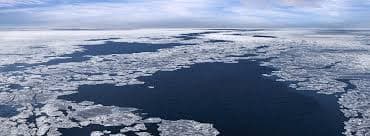
Geoengineering, long debated as a possible shortcut to cool a warming planet, has once again come under fire. A new study led by scientists at the University of Exeter warns that five prominent geoengineering methods proposed for Earth’s polar regions could cause severe harm, disrupt ecosystems, and create global risks. The findings, published in Frontiers in Science on 9 September, conclude that lowering greenhouse gas emissions remains the only viable strategy to avert catastrophic climate change.
The Story
The study, led by geoscience professor Martin Siegert, assessed five geoengineering concepts designed to slow polar ice loss: stratospheric aerosol injection, sea curtains, sea ice management, basal water removal, and ocean fertilisation. Each of these methods was found to be technically flawed, economically unviable, or environmentally hazardous.
For example, stratospheric aerosol injection (SAI) involves releasing particles such as sulphur dioxide into the upper atmosphere to reflect sunlight. While often touted as a quick fix, the study warns that in polar regions, SAI would be ineffective during winters when no sunlight is available, and redundant in summers when snow and ice already reflect much of the sunlight. Even worse, a sudden halt to SAI could trigger “termination shock,” leading to a rapid temperature surge within a decade. Without international governance, funding, and accountability, SAI risks becoming a dangerous gamble.
Other proposals fared no better. Sea curtains anchored to the seafloor to block warm currents from reaching glaciers would face extraordinary technical, logistical, and ecological barriers. Sea ice management using glass microbeads or water pumps could demand resources equivalent to global annual plastic production or billions of dollars in continuous energy use — with questionable results. Basal water removal under glaciers was deemed impractical, while ocean fertilisation with iron filings risked disrupting marine food chains.
The costs are staggering: sea curtains alone could exceed $1 billion per kilometre, while large-scale ice-pumping projects could cost half a trillion dollars annually. For most methods, scientists concluded that the cure may be worse than the disease.
Concept: What Is Geoengineering?
Geoengineering refers to deliberate, large-scale interventions in Earth’s climate system to counteract global warming. Broadly, it falls into two categories:
-
Solar Radiation Management (SRM): Reflecting sunlight back into space (e.g., SAI, reflective particles, or space mirrors).
-
Carbon Dioxide Removal (CDR): Removing greenhouse gases from the atmosphere (e.g., afforestation, bioenergy with carbon capture, ocean fertilisation).
Advocates argue that geoengineering could buy time while societies decarbonise. Critics warn that it creates moral hazards, distracts from emission cuts, and carries unpredictable risks to ecosystems and geopolitics.
Why Polar Geoengineering?
The polar regions are warming at nearly four times the global average. Melting glaciers in Antarctica and Greenland are raising sea levels, threatening coastal populations worldwide. This has led some to propose targeted interventions in the poles to “buy time” against climate shocks.
However, scientists caution that interventions in the poles could disrupt global weather systems. Polar processes influence monsoons, ocean circulation, and nutrient flows that sustain marine life. What happens in the Arctic or Antarctic rarely stays there; ripple effects can destabilise agriculture and security thousands of kilometres away.
Why It Matters
The appeal of geoengineering lies in its promise of speed. Emission cuts take decades to reduce atmospheric carbon levels, while geoengineering could seemingly produce immediate cooling. But as this study highlights, such shortcuts risk trading one crisis for another.
Consider stratospheric aerosols: they might temporarily cool regions, but they cannot stop ocean acidification, biodiversity loss, or glacial melt driven by ocean heat. Once started, they demand indefinite continuation — a political and financial burden that no global mechanism currently supports. Similarly, large-scale ocean fertilisation might boost phytoplankton growth but risks oxygen depletion and species collapse.
For the global south, which already faces disproportionate climate impacts, the consequences of unilateral geoengineering projects by wealthier nations could be severe. Weather disruptions could alter rainfall patterns, threatening food security in regions far removed from the poles.
Background / Context
The Five Polar Proposals
-
Stratospheric Aerosol Injection (SAI): Release of sulphur or calcium carbonate particles into the stratosphere. Risks termination shock, ineffective in polar dark winters, and requires perpetual funding.
-
Sea Curtains/Sea Walls: Floating barriers to block warm water. Technically unfeasible, ecologically damaging, and exorbitantly costly.
-
Sea Ice Management: Spraying glass beads or pumping seawater to freeze. Logistically impossible, risk of ecotoxicity, and could even absorb more heat.
-
Basal Water Removal: Pumping out subglacial water to slow glacier flow. Highly energy-intensive and unsustainable.
-
Ocean Fertilisation: Adding iron to promote phytoplankton growth. Risks disturbing marine food chains and nutrient cycles.
Economic Context
While some methods seem affordable on paper (e.g., $55 million annually per country for SAI), hidden costs, legal liabilities, and maintenance needs push real expenses into the billions or trillions. By comparison, investing in renewable energy and emissions reduction yields more predictable and equitable benefits.
Implications
The implications of this research are far-reaching. For climate policy, it reinforces the primacy of mitigation through decarbonisation rather than untested interventions. For international law, it exposes a governance vacuum — there is no global framework to regulate geoengineering projects, raising the risk of unilateral action. For science, it highlights the need to focus research on adaptation and resilience rather than speculative technologies.
On a social level, reliance on geoengineering risks fuelling a “technological illusion” that complex climate problems can be fixed with engineering alone. This could weaken public and political will to undertake difficult but necessary changes in energy, consumption, and land use.
Beyond Geoengineering: Decarbonisation and Resilience
The study stresses that lowering carbon emissions is still the safest and most effective way to slow climate change. Unlike geoengineering, decarbonisation addresses the root cause — greenhouse gas accumulation. Every tonne of avoided emissions reduces future warming and air pollution, while also improving public health.
Complementary strategies such as expanding renewable energy, restoring degraded ecosystems, and supporting community-based conservation are more reliable than large-scale engineering interventions. However, these too face challenges: fossil fuel dependence, high costs of transition, political resistance, and inequalities between developed and developing countries.
Even so, scientists argue that investing in emission reduction and climate-resilient development is far more cost-effective and ethically sound than pursuing speculative geoengineering experiments.
Conclusion
The Exeter-led study offers a sobering verdict: polar geoengineering methods, from stratospheric aerosols to ocean fertilisation, are unlikely to deliver safe or effective climate relief. Instead, they risk creating new crises while distracting from proven solutions. The message for policymakers is clear: the world cannot afford to gamble on untested technologies while delaying emission cuts. Decarbonisation and resilience-building remain the only reliable paths to climate stability.