

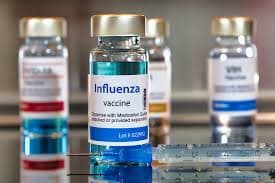
India’s influenza burden is higher and more complex than commonly assumed. With two distinct peaks of outbreaks each year and vaccines that lose potency within months, experts argue that the country’s single-dose annual vaccination strategy leaves millions unprotected for half the year.
The Story
Influenza, often mistaken for a mild seasonal illness, is a major cause of respiratory infections, hospitalisation, and death globally — and India is no exception. Surveillance data from the National Centre for Disease Control show that the virus typically surges twice: once in the winter months (January–March) and again in the post-monsoon period (July–September).
The 2024–2025 season illustrated this double pattern vividly — a severe outbreak of influenza B during winter followed by a surge of H3N2 in late summer. Despite this recurring pattern, India still relies on a single annual influenza vaccine dose, which experts now say is scientifically inadequate.
Why India’s Current Strategy Falls Short
Existing influenza vaccines — both inactivated injectable and live-attenuated nasal forms — offer only short-lived immunity. Studies show that antibody levels peak within weeks of vaccination but wane within 3–6 months, sometimes in as little as 90 days.
This means that people vaccinated before the monsoon are unprotected by winter, and those vaccinated before winter are vulnerable by the next monsoon. “Whichever dose is chosen, half of the year’s influenza burden remains unaddressed,” the authors note.
Unlike measles or polio vaccines, which confer long-term immunity, flu shots require constant reformulation because the virus mutates rapidly through antigenic drift, producing new strains like H1N1, H3N2, and influenza B each season.
The Case for Biannual Vaccination
Given India’s dual-peak flu cycle, experts propose a biannual vaccination schedule:
-
First dose: May–June (before monsoon outbreaks)
-
Second dose: November–December (before winter outbreaks)
This two-dose strategy could maintain immunity year-round, reducing infections, hospital admissions, and deaths — especially among children, older adults, and high-risk groups such as people with chronic diseases.
While two flu shots a year might seem impractical, experts point out that the health gains outweigh the logistical challenges, particularly if the government integrates influenza vaccination into national health programmes.
India’s Low Vaccine Coverage
Despite over a decade of availability, fewer than 5% of Indians receive flu vaccines annually. The reasons include:
-
Public perception of influenza as a minor illness
-
Low awareness about its complications
-
Lack of government policy support
-
Dependence on the private sector for vaccine distribution
Currently, flu vaccines are not part of the Universal Immunisation Programme (UIP), leaving them out of reach for most citizens. Experts argue that this omission is a costly oversight, given the disease’s toll in hospitalisations and productivity losses.
Why Policy Backing Matters
A government-supported influenza immunisation plan could change public attitudes and improve access. By including flu vaccines in the UIP, India could:
-
Use its strong domestic vaccine manufacturing to make doses affordable
-
Ensure distribution through public health infrastructure
-
Conduct mass awareness campaigns to normalise annual and biannual flu vaccination
Such a policy would also strengthen India’s pandemic preparedness, since influenza surveillance and vaccine logistics overlap with systems needed for emerging respiratory viruses.
The Way Forward
Experts stress that influenza should no longer be viewed as a trivial seasonal illness but as a serious public health challenge requiring scientific and policy recalibration. A biannual vaccination programme, tailored to India’s epidemiological patterns, could transform disease control and save thousands of lives each year.
Conclusion
The evidence is clear: India’s single-dose flu vaccination model does not match its twin epidemic seasons. A biannual schedule, supported by government policy, domestic production, and public education, could ensure consistent protection, reduce preventable deaths, and mark a pivotal shift toward proactive health governance.